

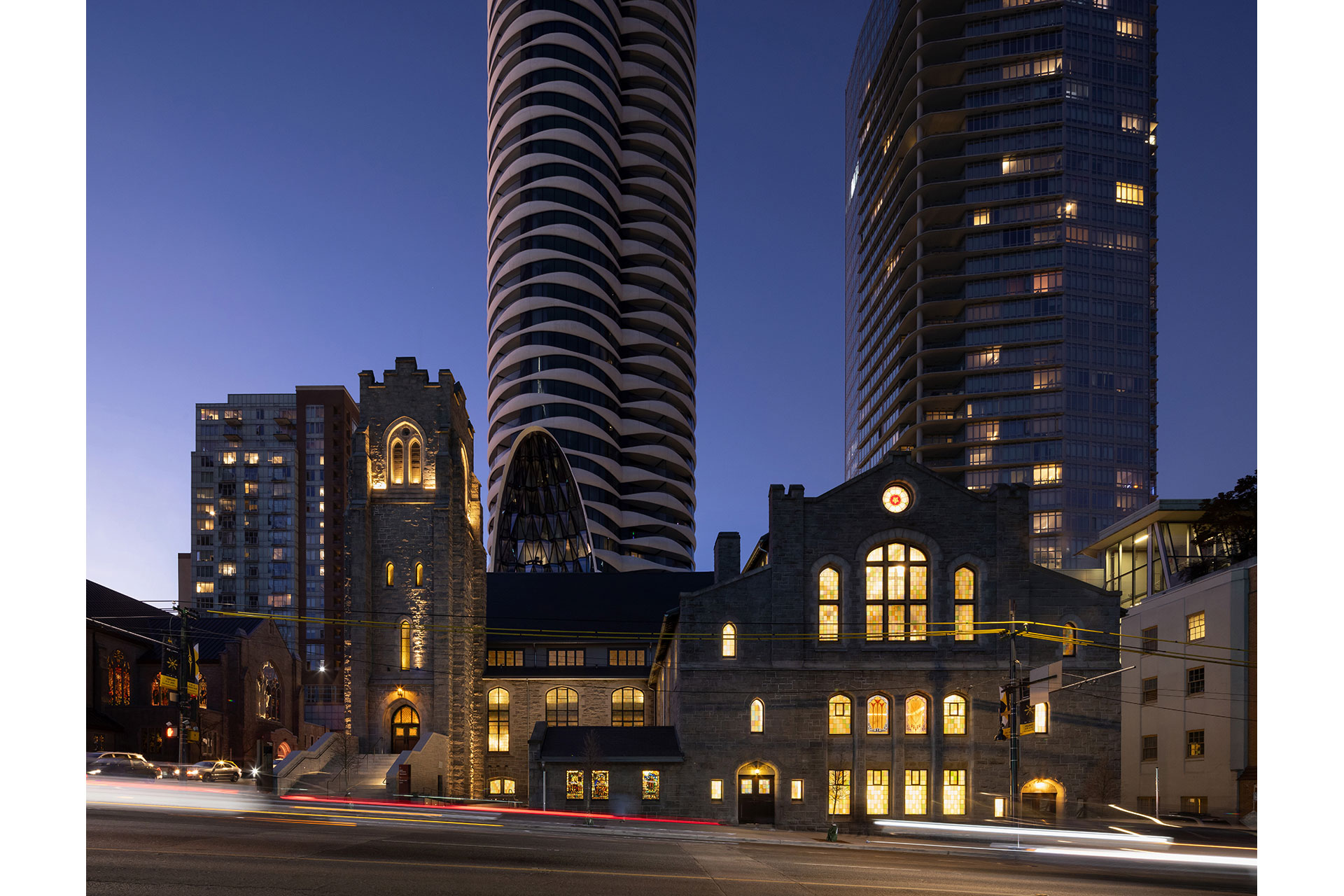
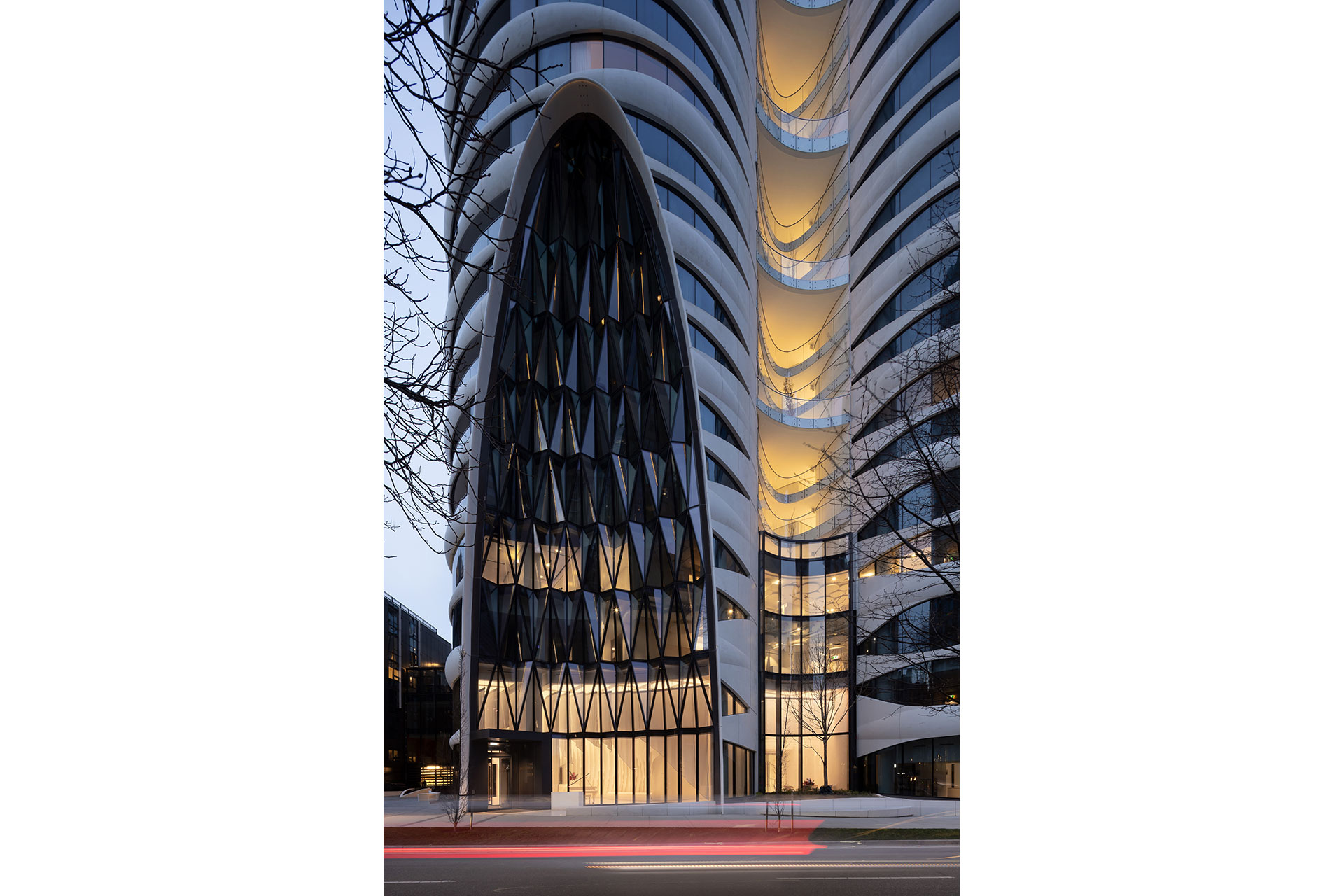
Vancouver’s new 600,000sq ft mixed-use development celebrates the constant change of nature and the passage of time with a focus on natural views and materials that connect the heritage with future by dissolving boundaries. Located in central West End, the Butterfly – new 57-storey luxury market tower – is combined with one of Vancouver’s oldest churches, the historic First Baptist Church built in 1911. The project is designed to LEED Gold standards with an on-site low carbon district energy plant as well as low carbon energy supply, sustainable site design, access to nature and zero waste planning.
Architectural lighting aimed to harmonize historic charm with modern design, enhancing visual appeal and performance through sensitive upgrades and advanced infrastructure. The lighting design also incorporates cutting-edge lighting infrastructure to ensure visual and technical performance, sustainability, and flexibility for both spaces—blending the historic with the modern in a balanced and inspiring way.
The lighting was used as unifying element that respects and enhances the distinct identities of two neighboring structures: a treasured heritage church and a contemporary residential and mixed-use development. By carefully upgrading the church’s lighting to highlight its architectural significance and integrating a complementary design language into the new development, lighting design team created a cohesive visual experience that honors tradition while embracing innovation.
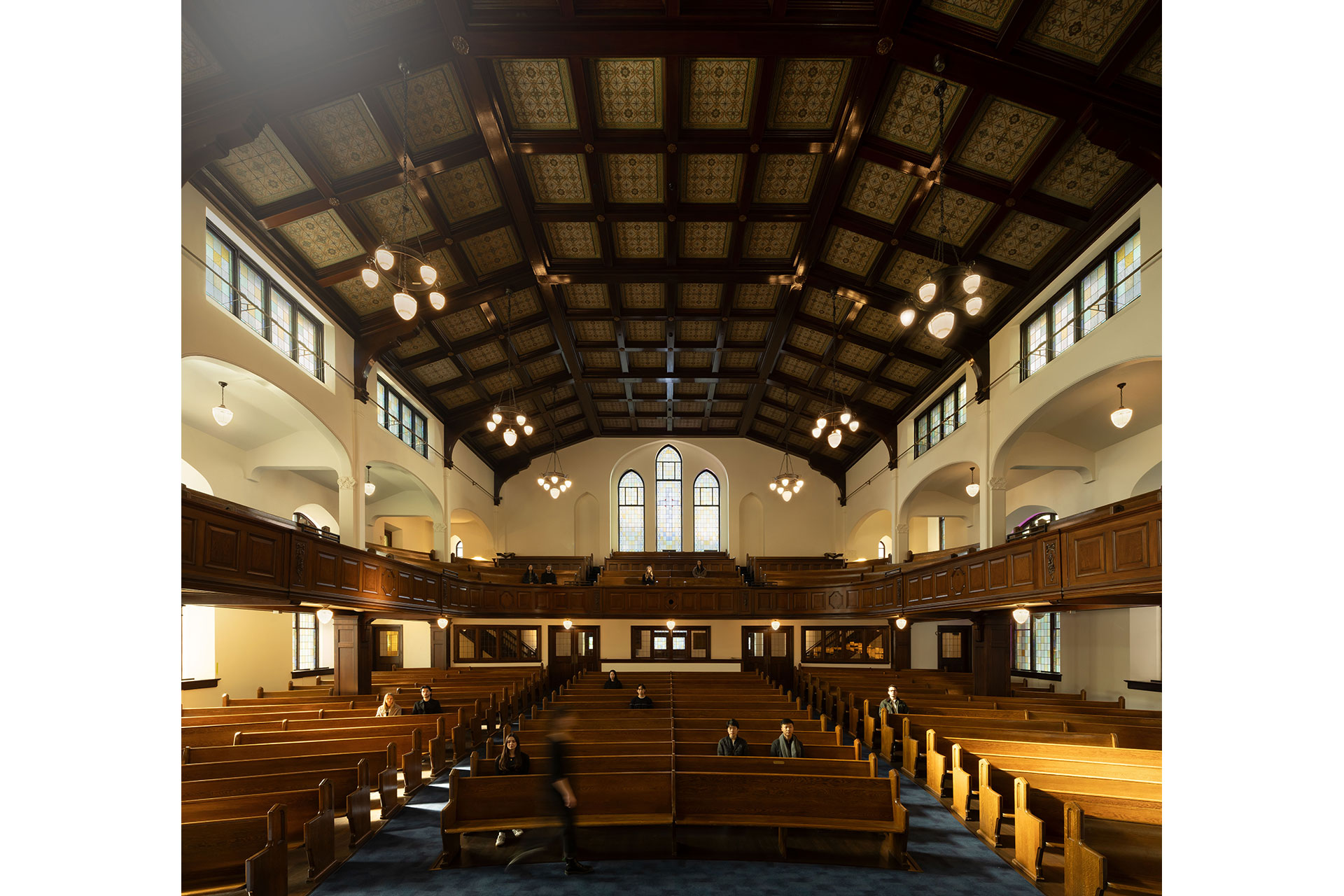
Within the church interior, the lighting design strategy focused on preserving architectural heritage while upgrading system performance. In the sanctuary, existing decorative-style luminaires were retrofitted with higher-efficiency sources to maintain the historical aesthetic. Supplemental accent lighting was added to the organ using tightly controlled beam distributions to enhance vertical emphasis without introducing glare into the worshipper sightlines.
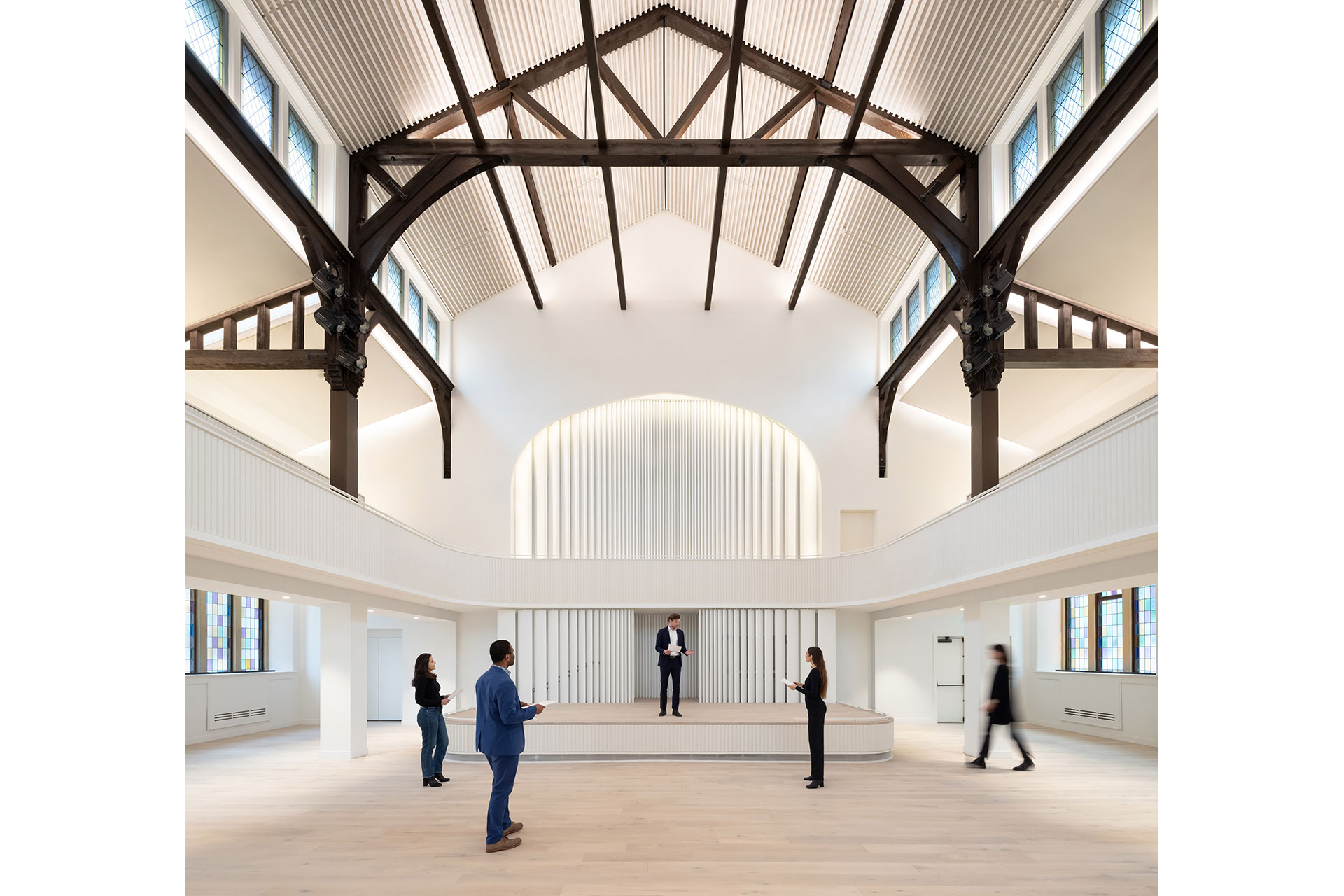
In Pinder Hall, the primary ambient illumination is delivered through indirect lighting integrated into architectural coves and recesses, providing uniform reflectance across the whitewashed surfaces. Performance lighting is incorporated into the same space blending within the architecture and providing front and side lighting for the stage. Recessed linear up/down fixtures within the stage zone provide both accent lighting and backstage visibility, with distributions calibrated to avoid spill light onto the audience.
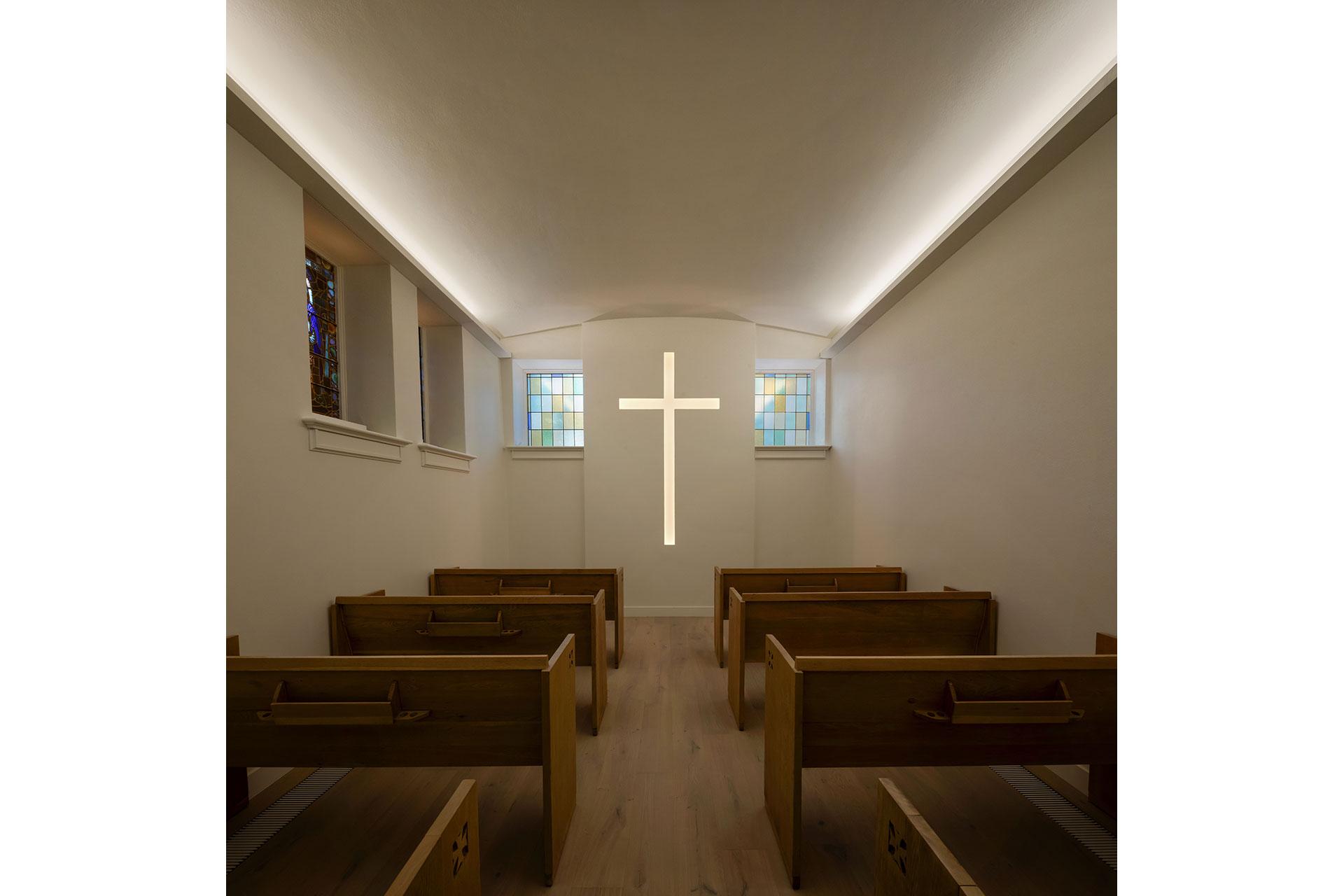
A consistent methodology—indirect ambient lighting paired with targeted accent illumination on lit focal elements—was applied throughout secondary spaces, including the smaller chapels, to maintain visual hierarchy and spatial coherence.
Exterior perception of the church is enhanced through controlled interior-to-exterior glow. Luminaires positioned at key interior window bays deliver a calibrated glow on the main façade. The bell tower is illuminated mainly with exterior-mounted uplighting accentuating the symmetrical geometry of the tower from distance. The entrance of the bell tower is also accentuated with historic type pendant, interior glow and step lights for the stairs to provide wayfinding cues for arriving visitors.
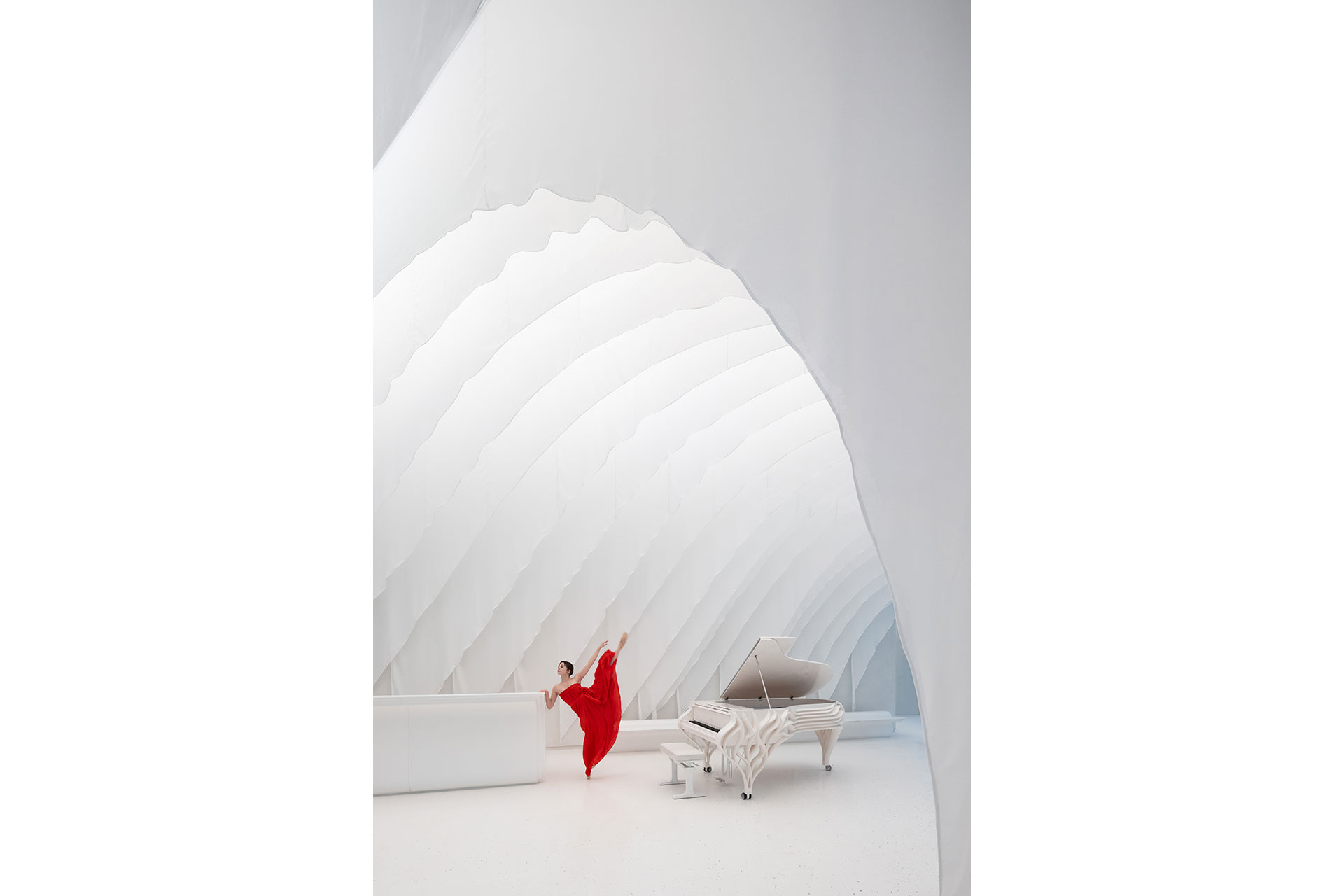
In core and shell areas such as the atrium and balconies, a soft and subtle wash of the interior surfaces was implemented to create a welcoming and comfortable space for the visitors. Fixture selection and aiming criteria were optimized to minimize shadows, ensure comfortable vertical illuminance levels, and support intuitive circulation.