
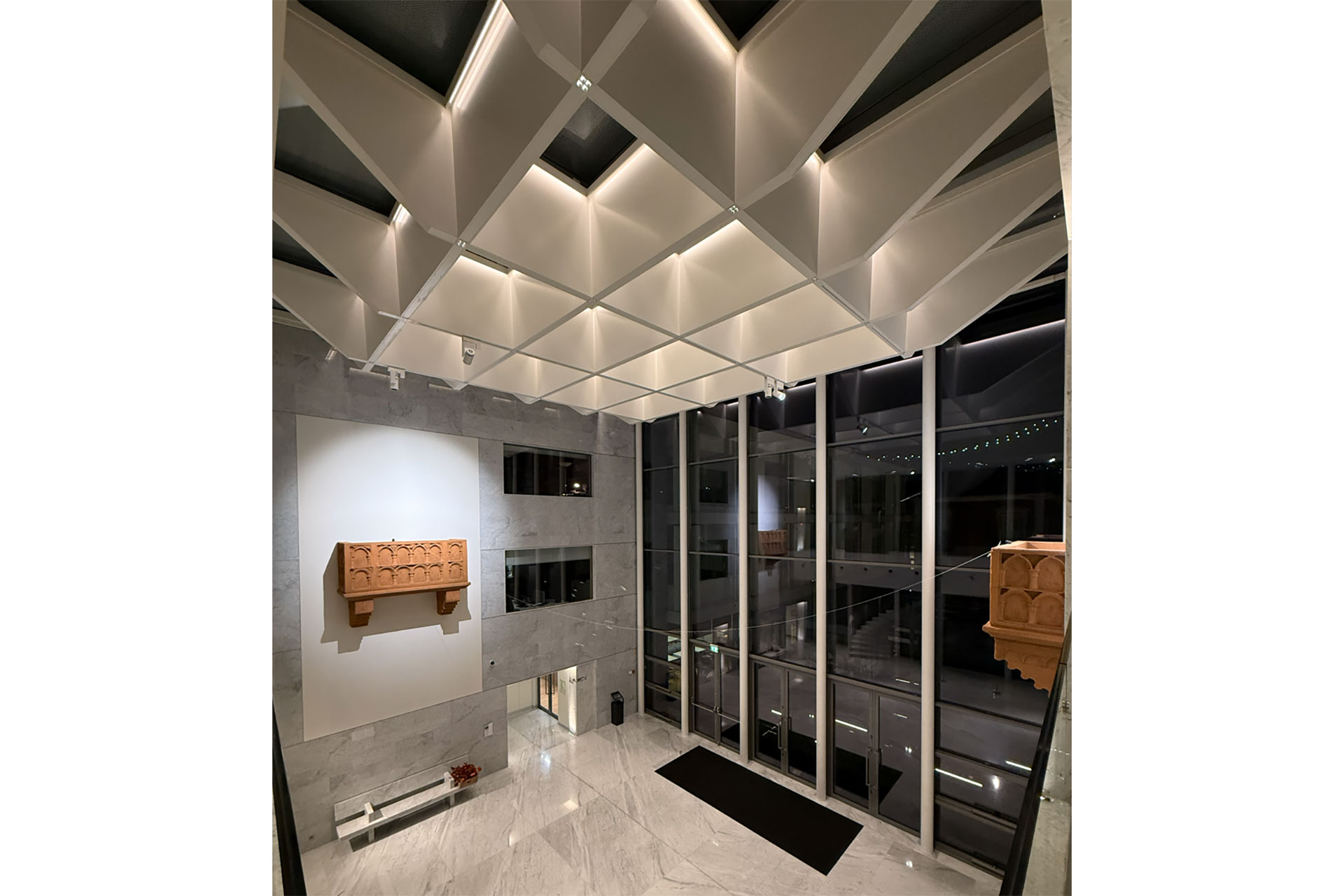
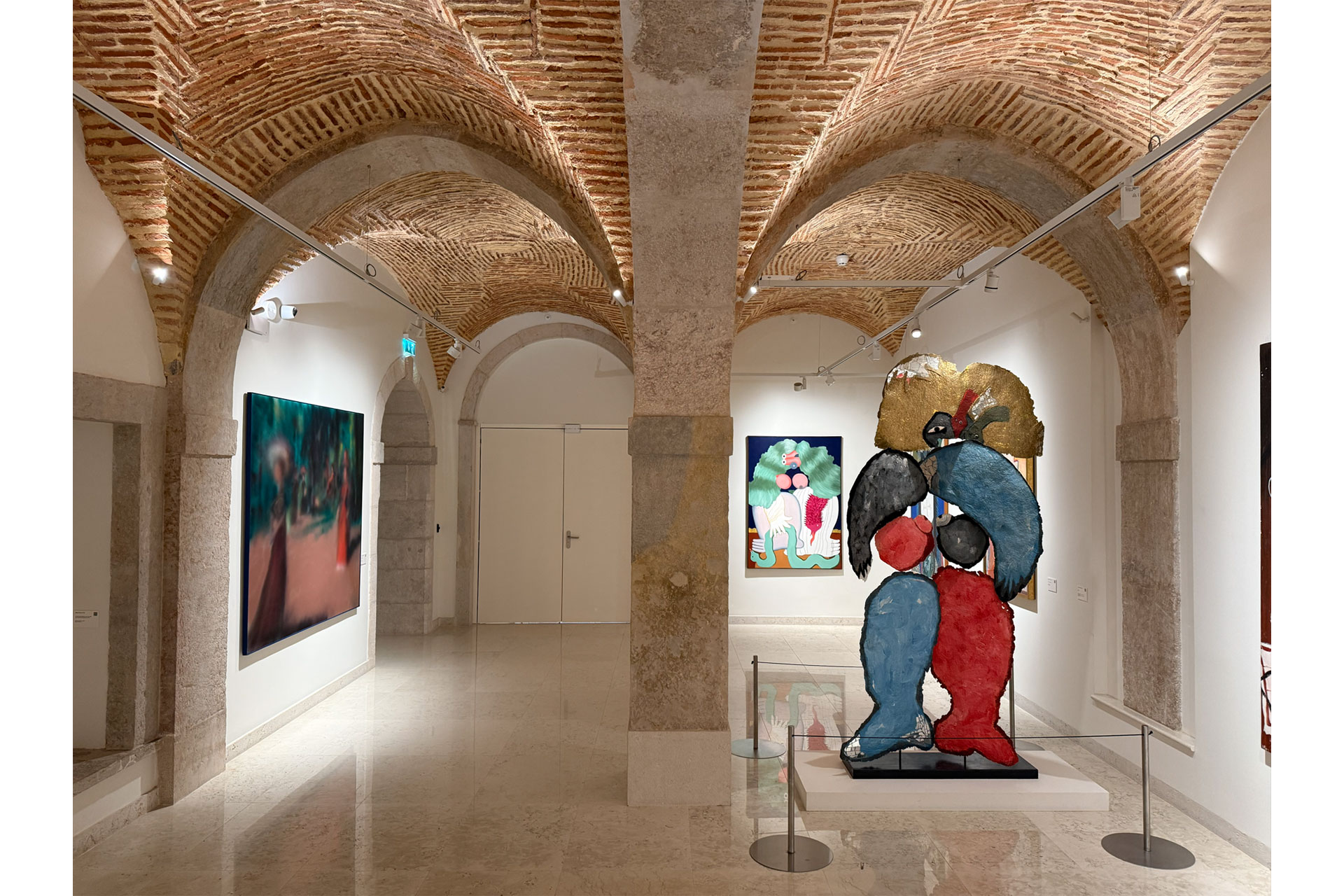
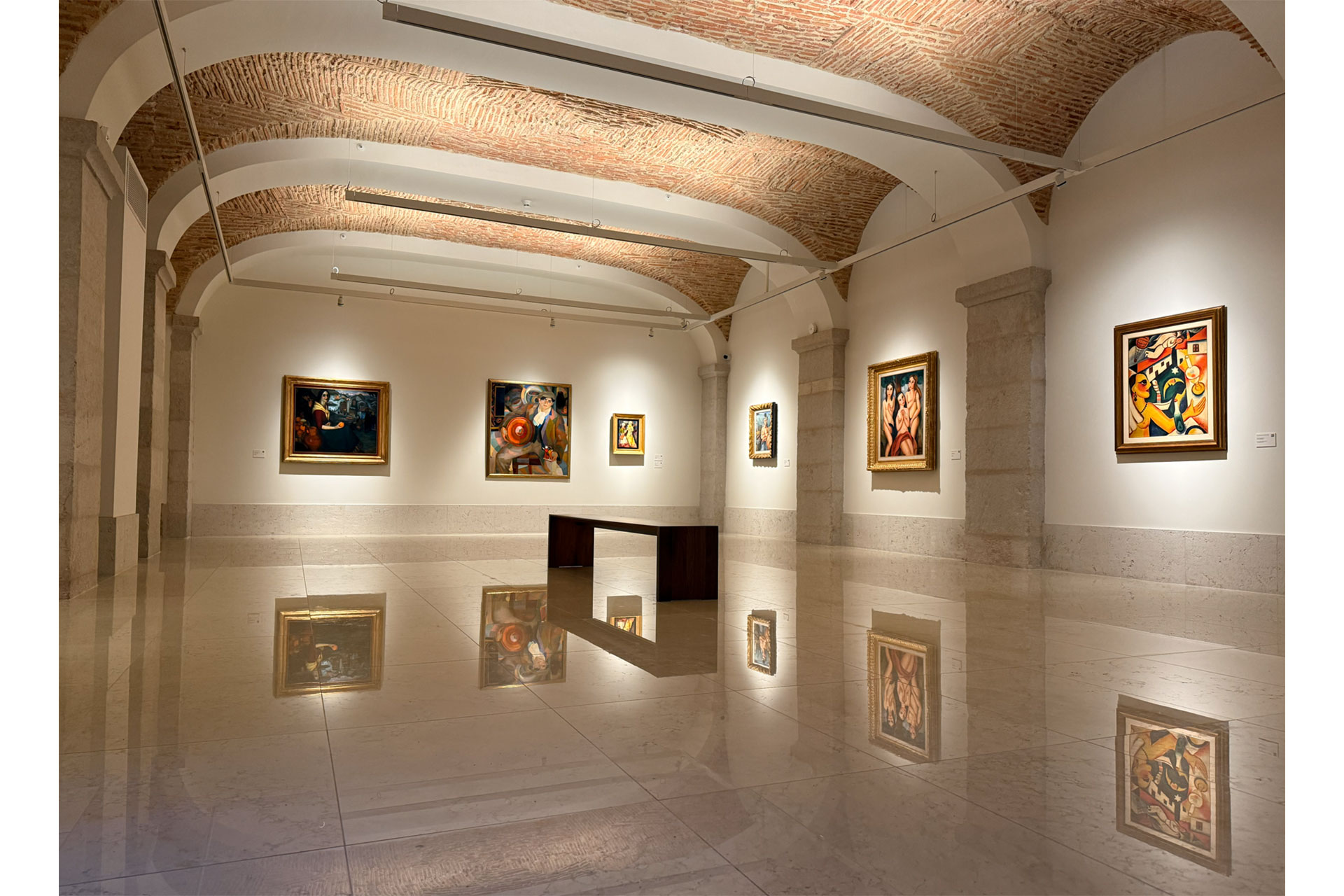
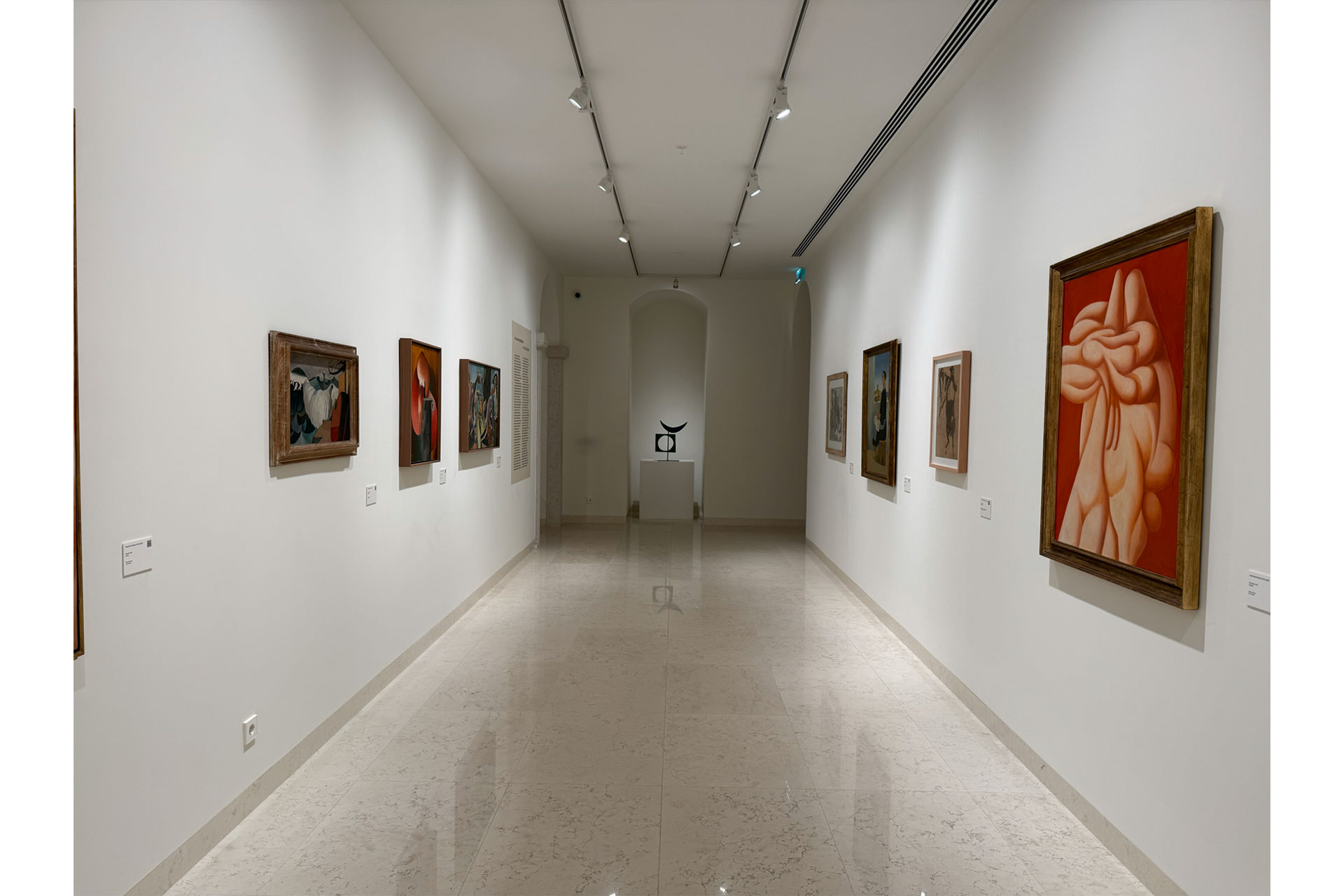
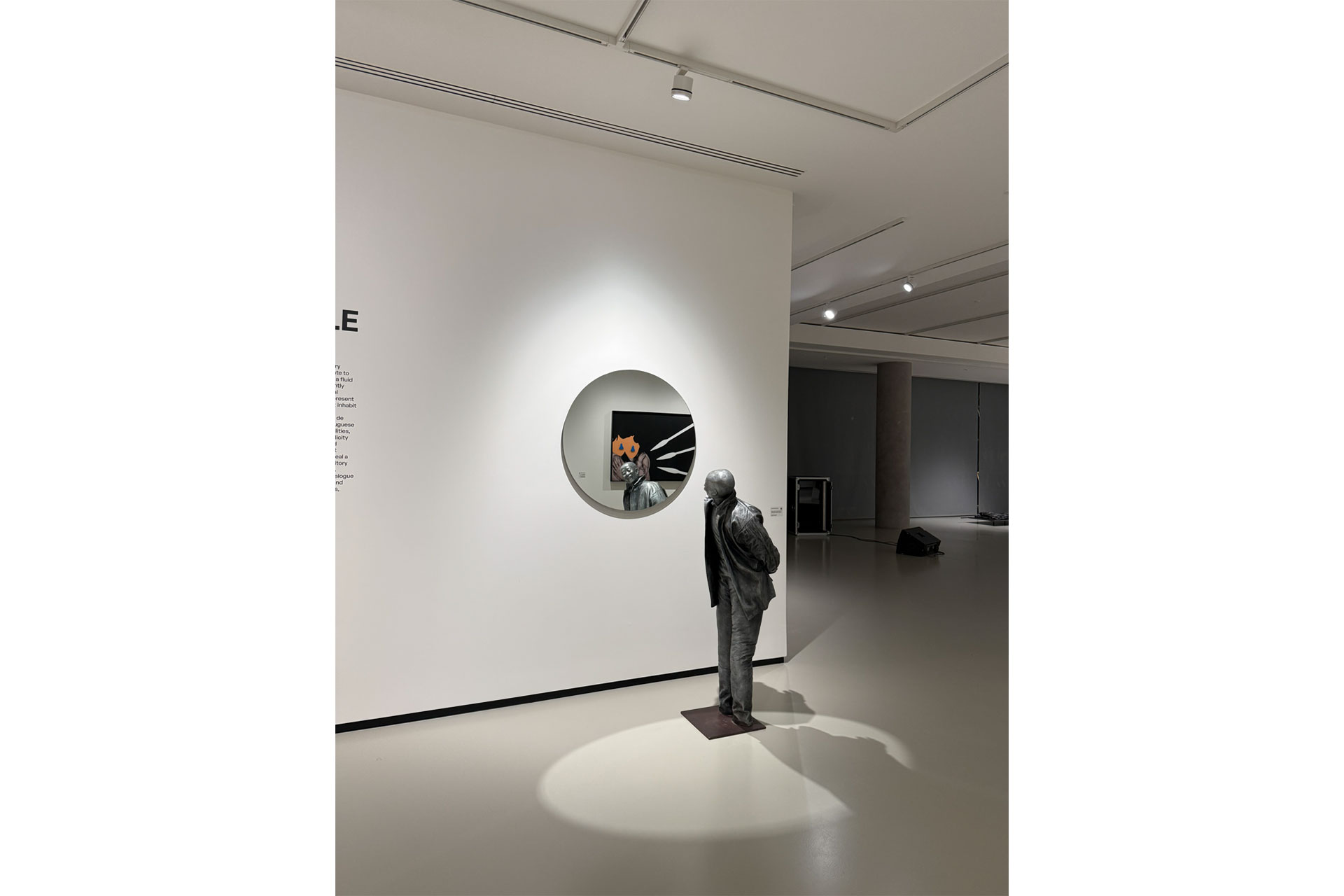
MACAM is a private museum of contemporary art unfolding across two buildings and four galleries, totalling 2,000 m². Two galleries inhabit a 19th-century palace, home to the permanent collection, where works by some of the most significant Portuguese artists from the 19th and 20th centuries are presented. The remaining two galleries occupy a contemporary architectural volume and host temporary exhibitions.
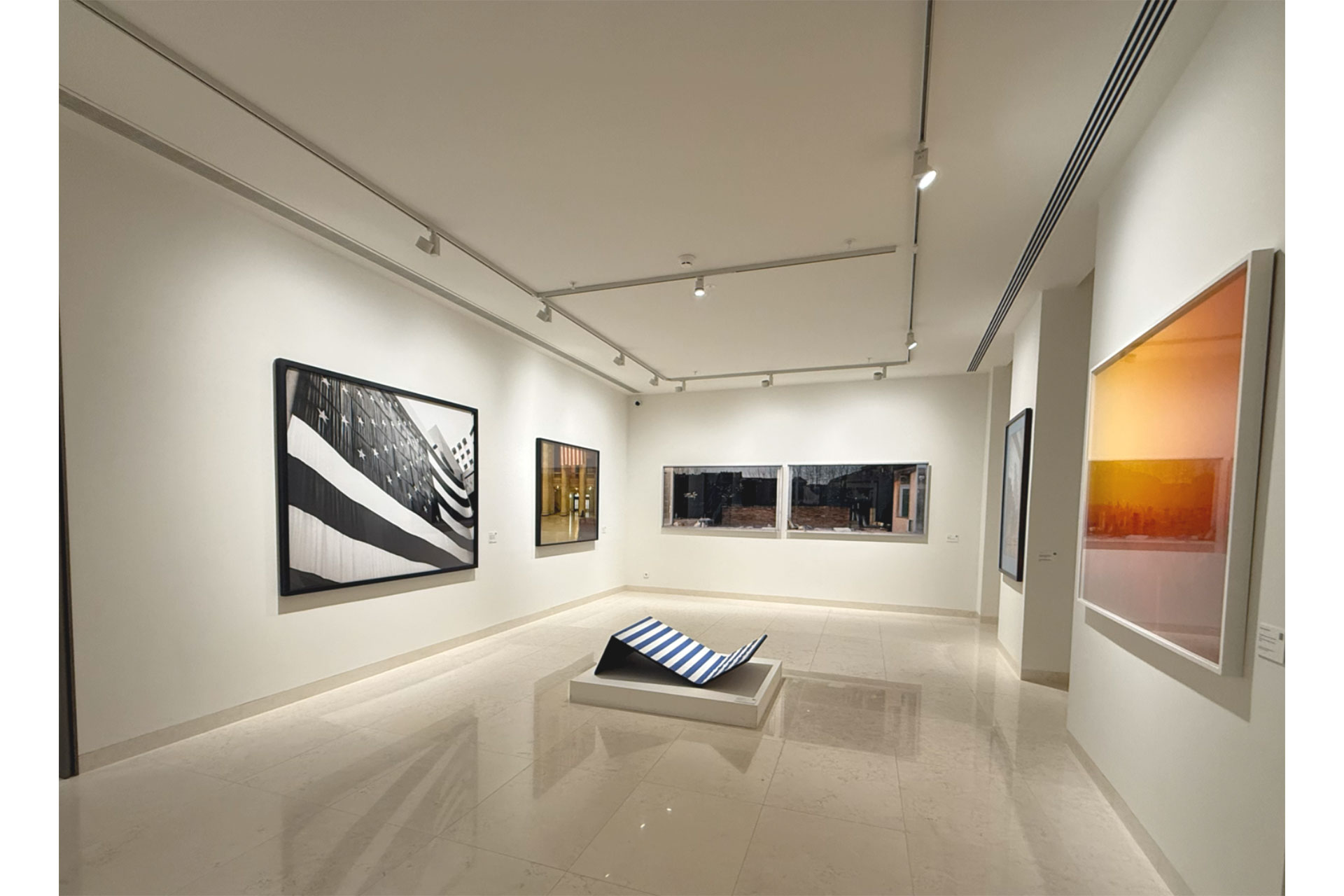
The project’s primary challenge lay in more than the control of daylight: it required negotiating reflections from a highly reflective floor and from glass-based artworks, demanding a lighting strategy of precision, delicacy and restraint.
The design concept was to create a spatial narrative, a journey through time guided by the subtle evolution of light. The visitor enters the first gallery among artworks from the 19th century, where warm colour temperatures and low light levels create an intimate and contemplative atmosphere. Light behaves almost like recollection: soft, luminous, and slow. As the visitor travels forward historically and architecturally, light gradually shifts: intensity increases, colour temperature cools, and the nature of illumination evolves to reflect the shift from classical approaches to modern artistic language.
This progression culminates in the 21st-century gallery, shaped by brutalist themes: a space bathed in cool, uniform light that reinforces the clarity and rawness of contemporary expression.
Beyond the museum, a themed hotel extends the cultural narrative. Each room is illuminated as if it were an autonomous gallery , a continuation of the museum’s journey, where every guest becomes both audience and inhabitant of art.
Within the building dedicated to temporary exhibitions, flexibility becomes essential. The lighting system is conceived to accommodate any curatorial direction, allowing exhibitions to transform the space freely and without constraint.
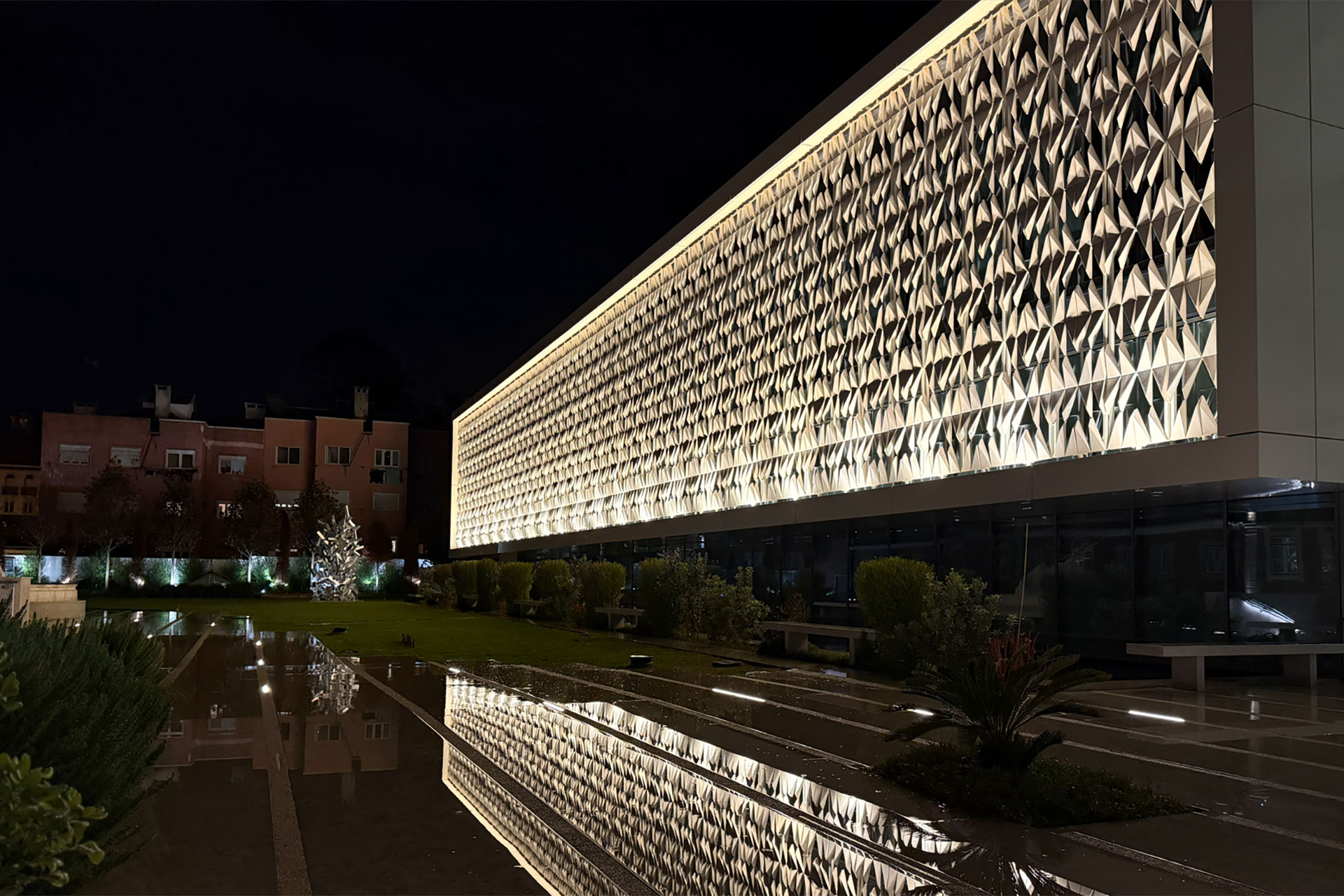
The exterior is equally considered. The façade lighting highlights the ceramic artwork of Maria Ana Vasco Costa with grazing light, revealing texture, depth and craftsmanship. At night, light becomes a bridge between the two buildings — a luminous thread guiding visitors through the site. The cultural garden and hotel are subtly illuminated not by direct fixtures but by the gentle reflections cast from this façade, allowing light to remain atmospheric, deliberate and respectful.
In this project, light is not merely functional. It is narrative, transition and emotion. It invites, reveals and connects, shaping perception and deepening the encounter between visitor, architecture and art.