

The interior lighting extends the concept of “Flowing Water · Drifting Clouds,” translating it into a series of atmospheric spaces shaped by gentle gradients of illumination rather than overt brightness. The aim was not simply to “light the building,” but to let light reveal the building’s inherent geometries, soften circulation paths, and guide visitors through a fluid spatial narrative.
The transition from exterior to interior begins in the semi-outdoor entrance canopy, where densely arranged linear luminaires run parallel across the soffit like streams of light.Their repetition creates a directional field that draws visitors inward, subtly compressing the space before releasing it again.This threshold space establishes the project’s lighting language: rhythmic, continuous, and shaped by flow.
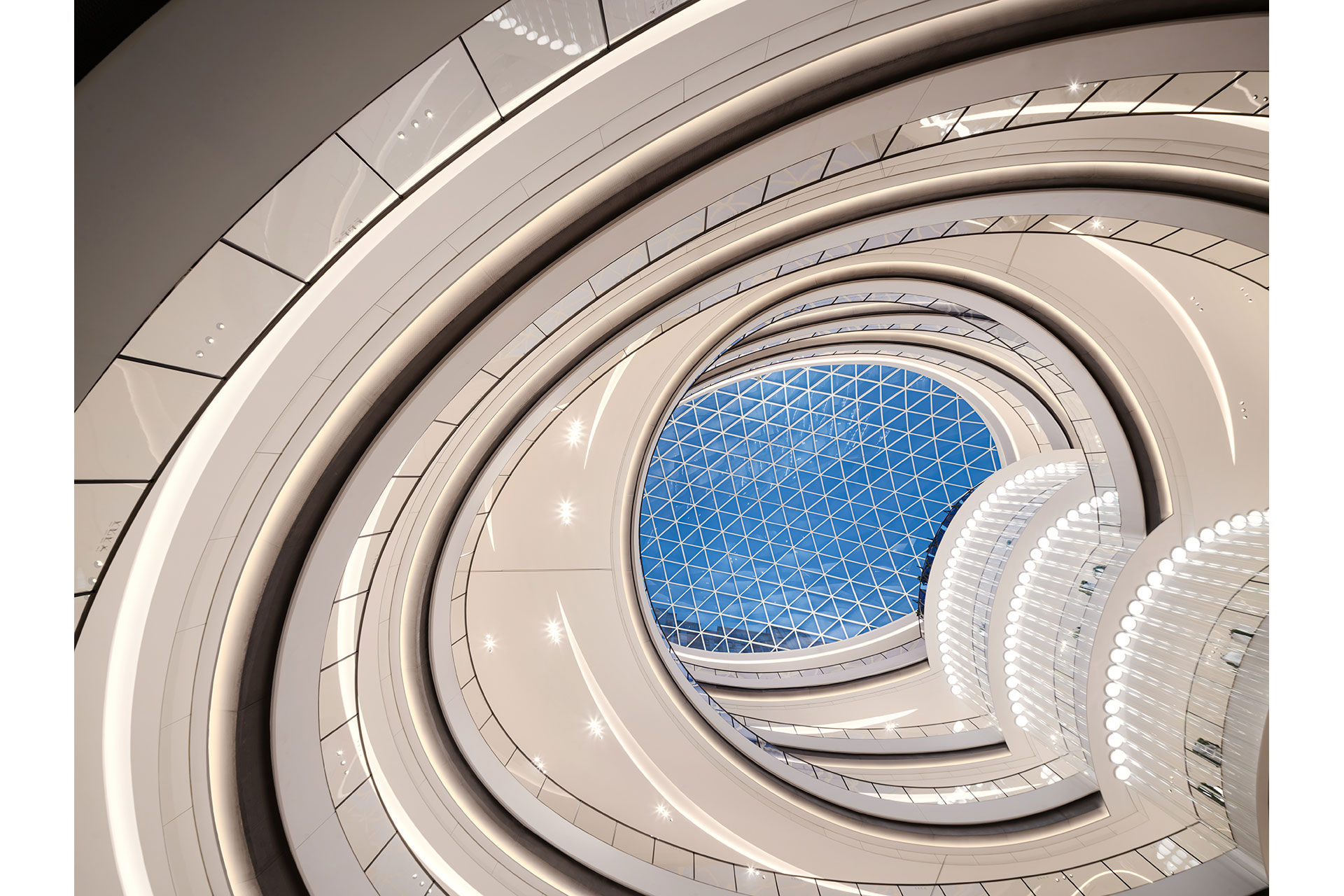
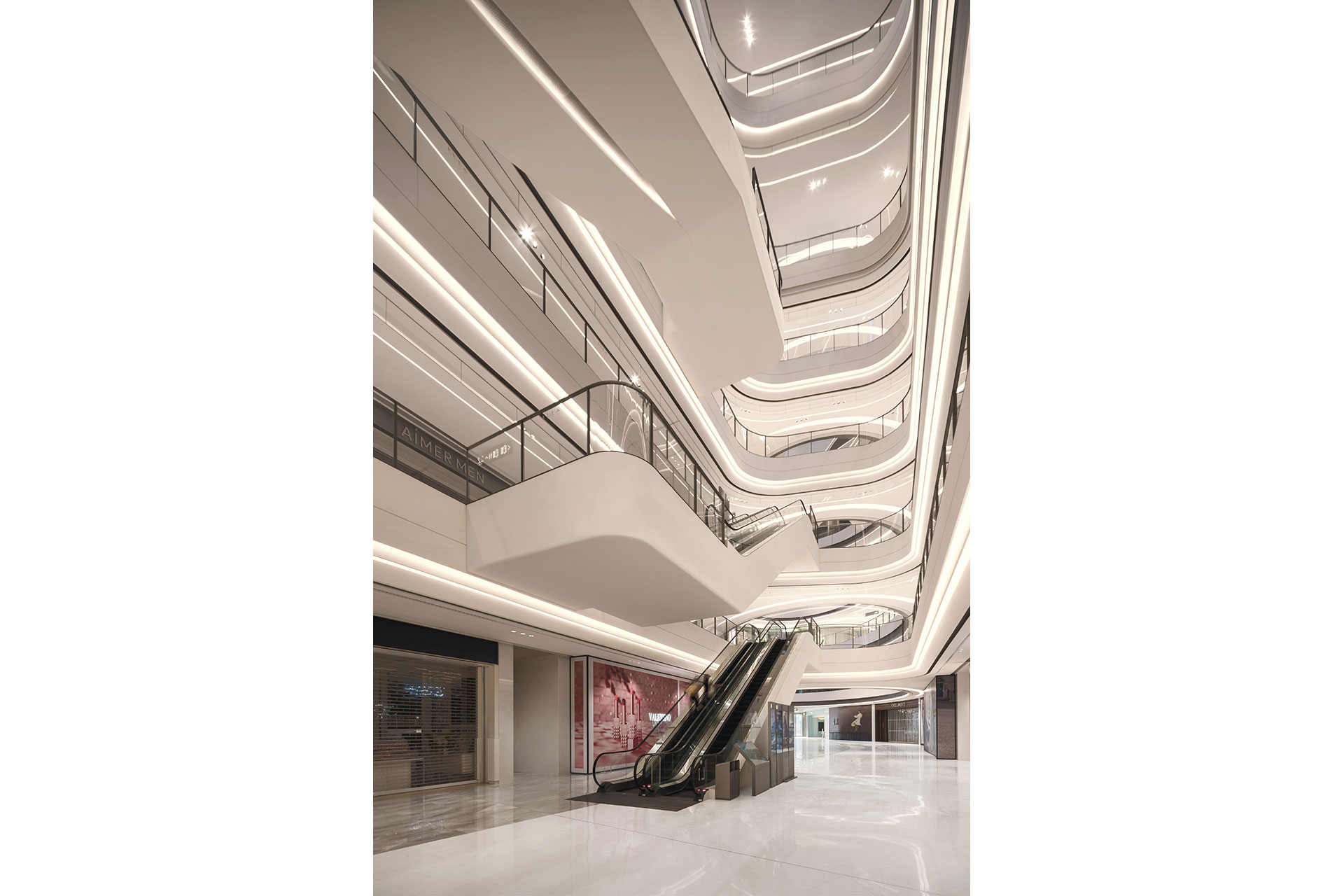
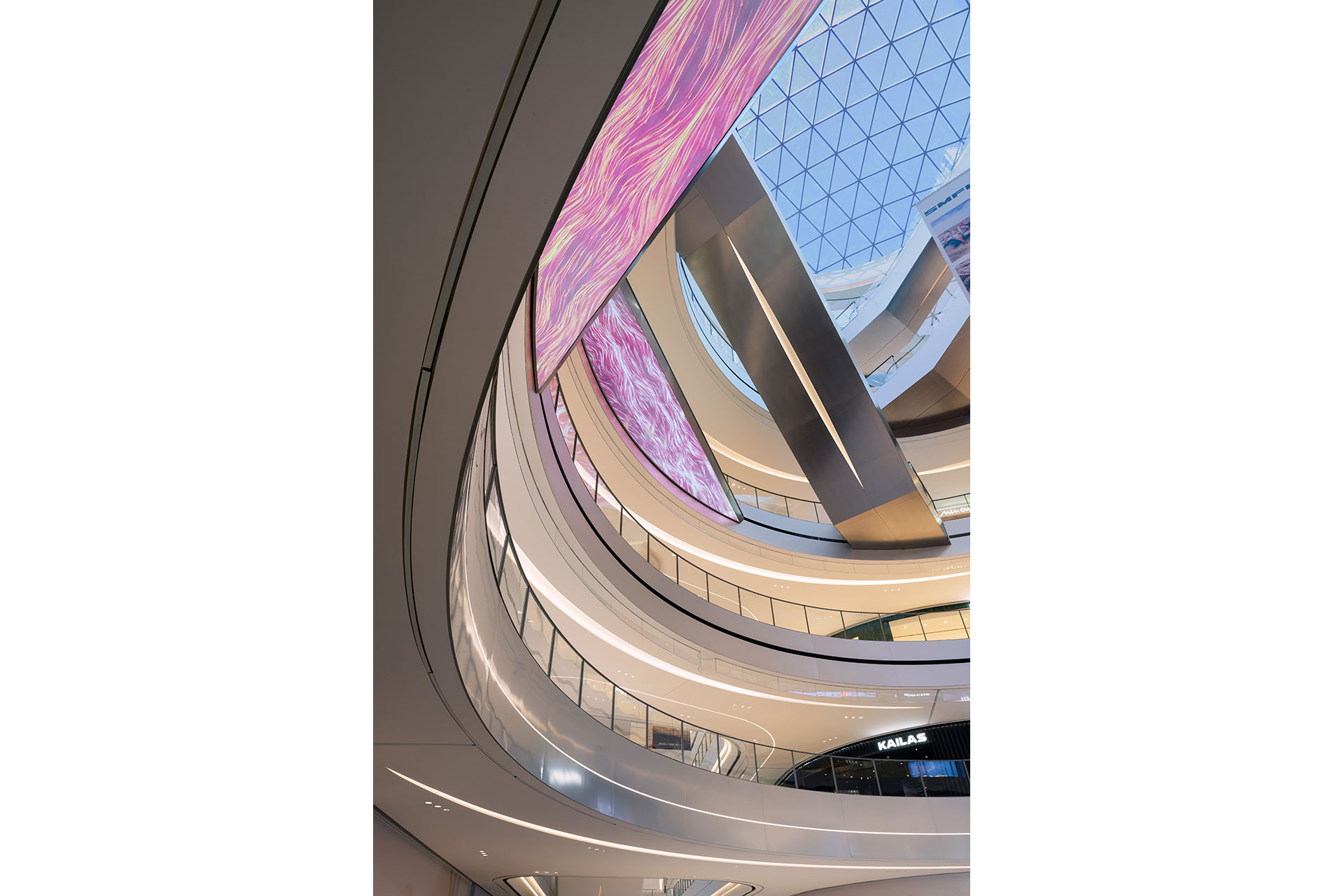
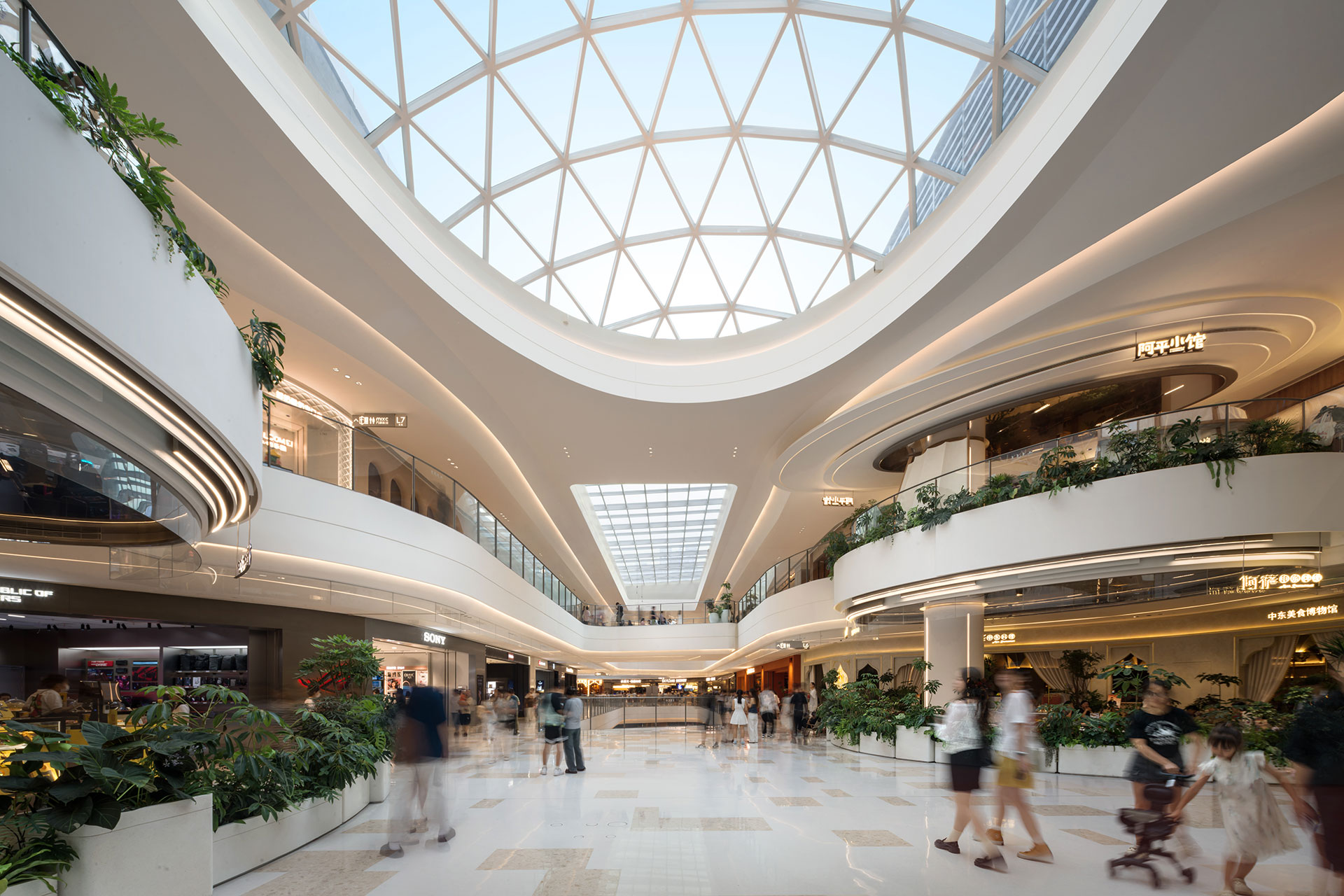
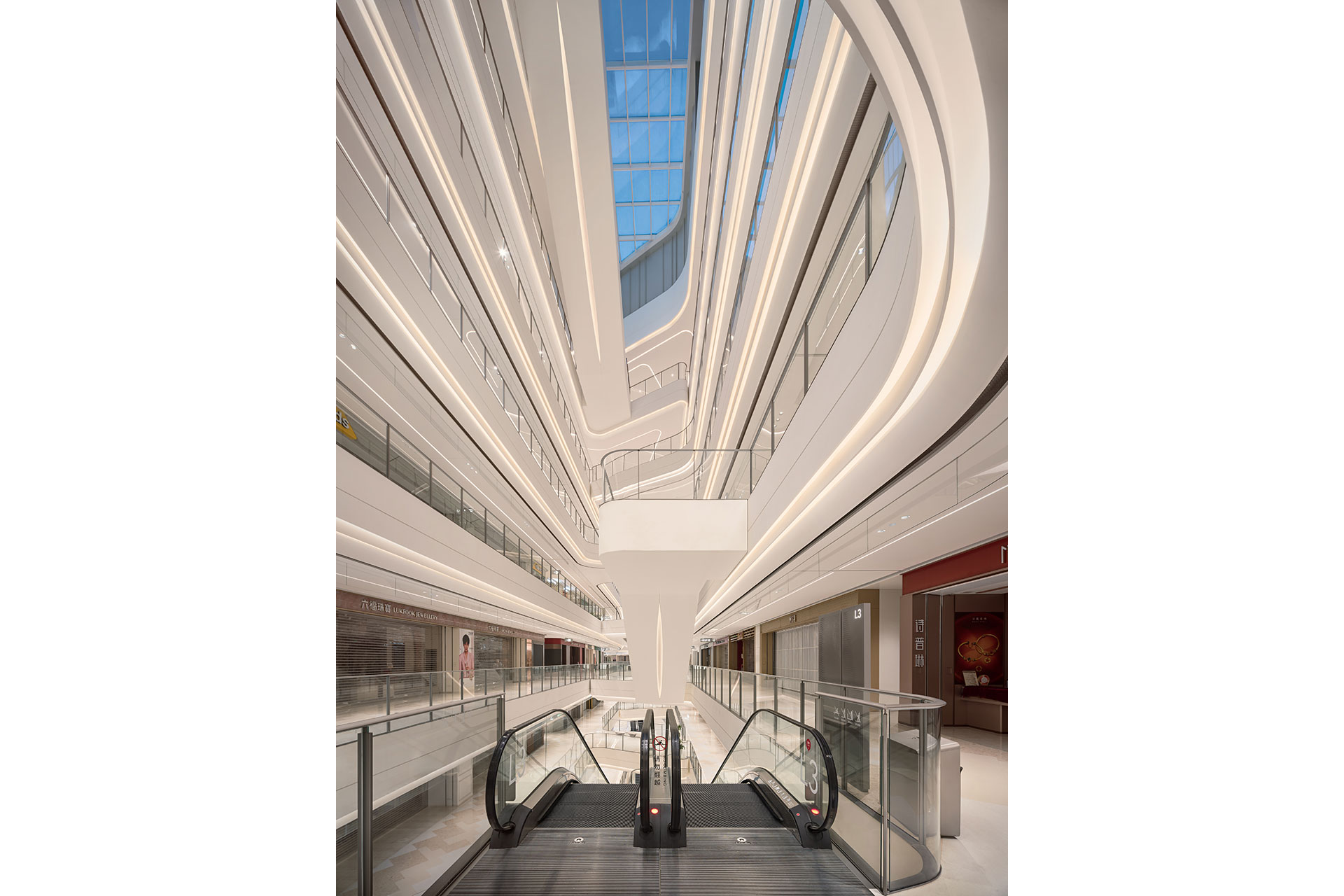
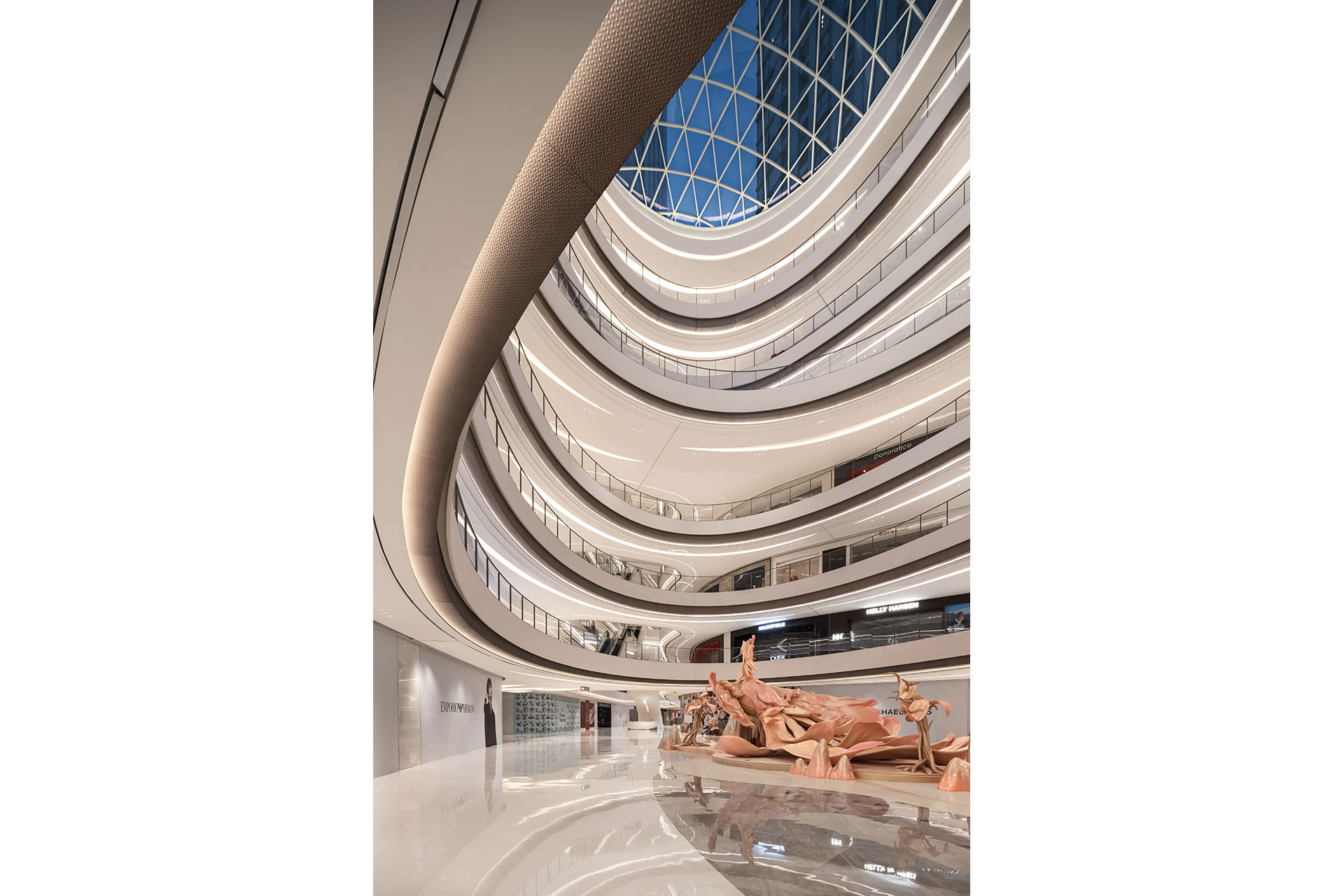
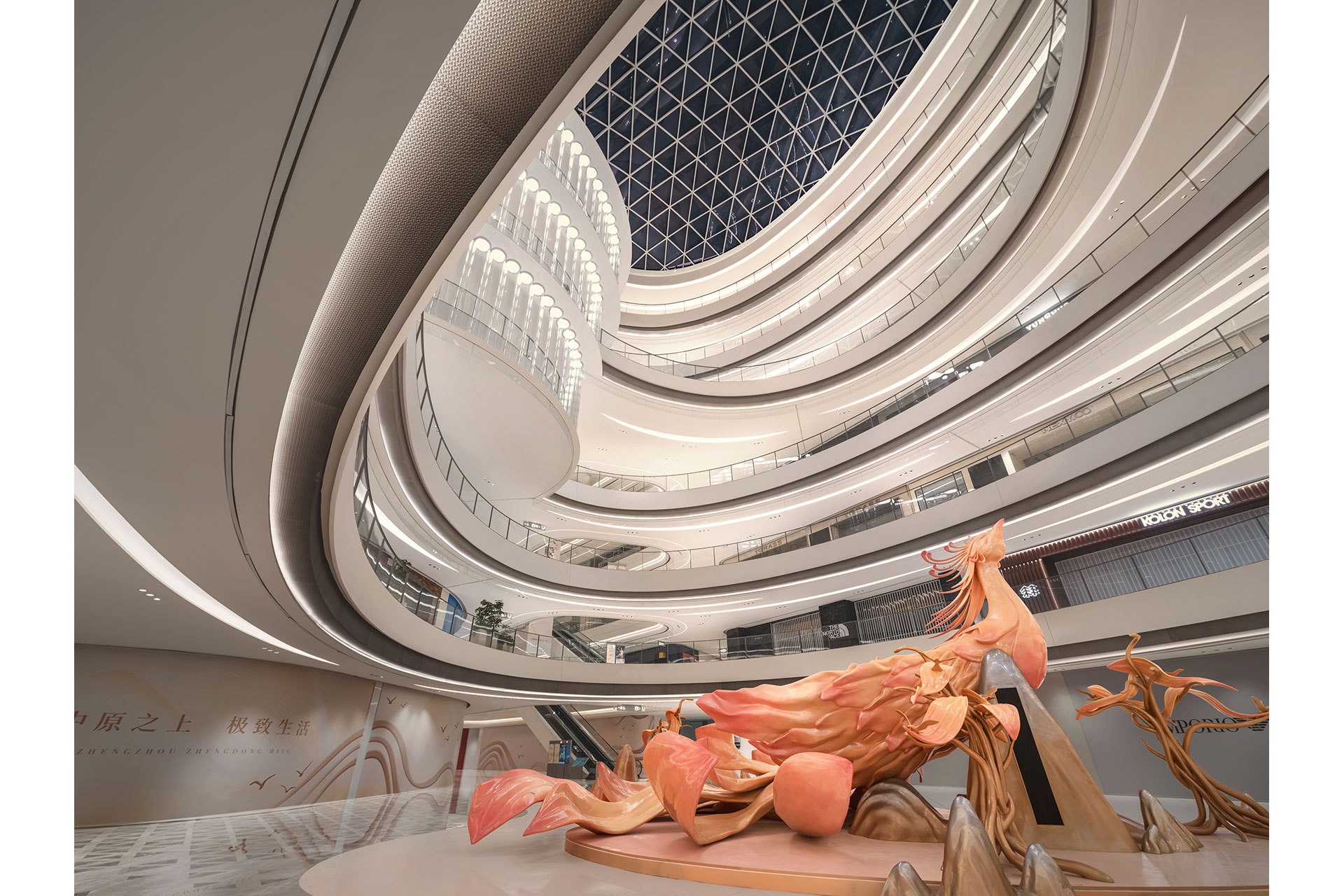
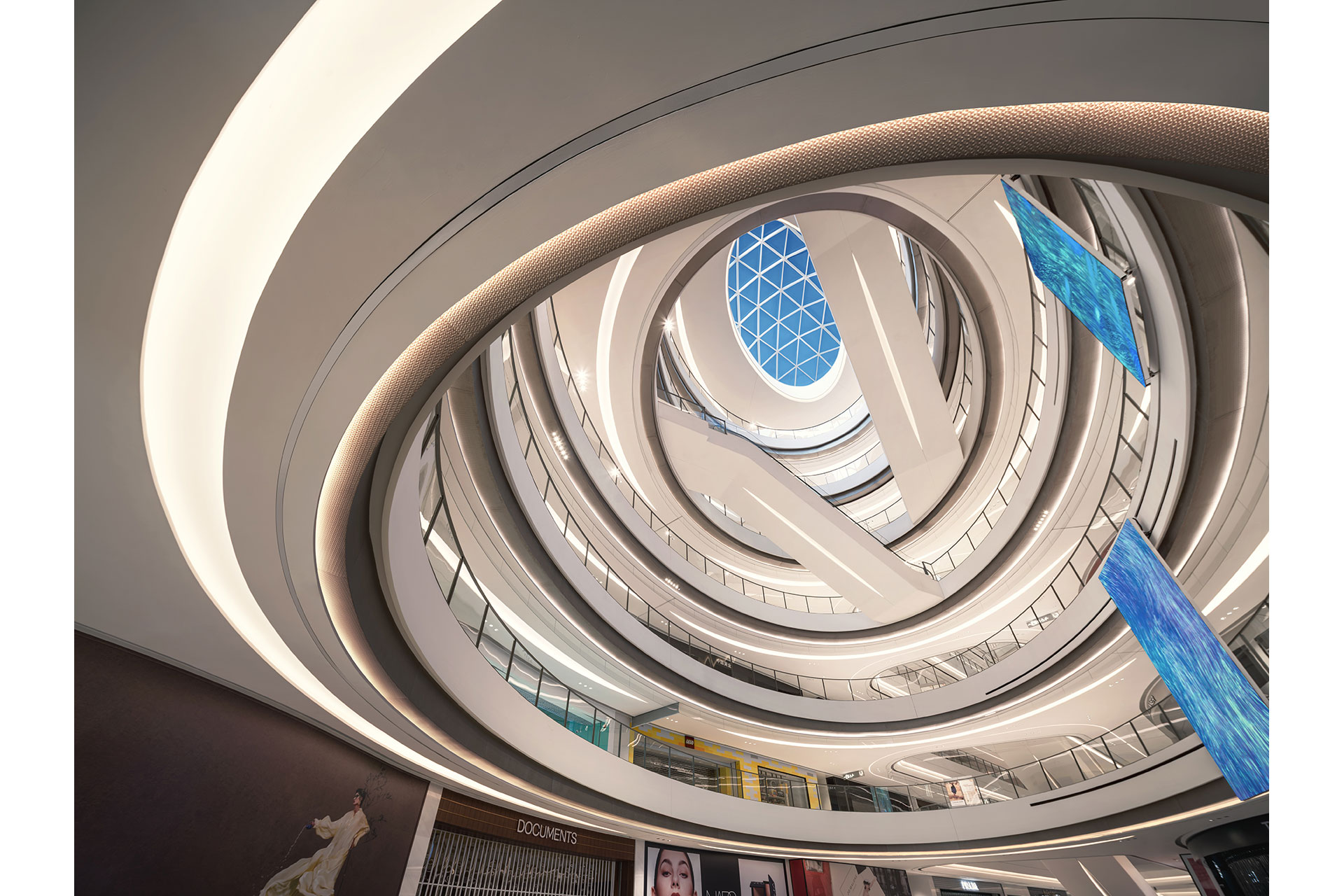
Within the atrium, the architecture opens into a multi-level composition of curving balconies and bridges. Recessed ring-shaped cove lights trace each floor plate, softening the edges into gentle halos and reinforcing the building’s flowing geometry. The effect is one of upward movement, with light drifting vertically like rising currents to create a calm yet dynamic core within the commercial interior.
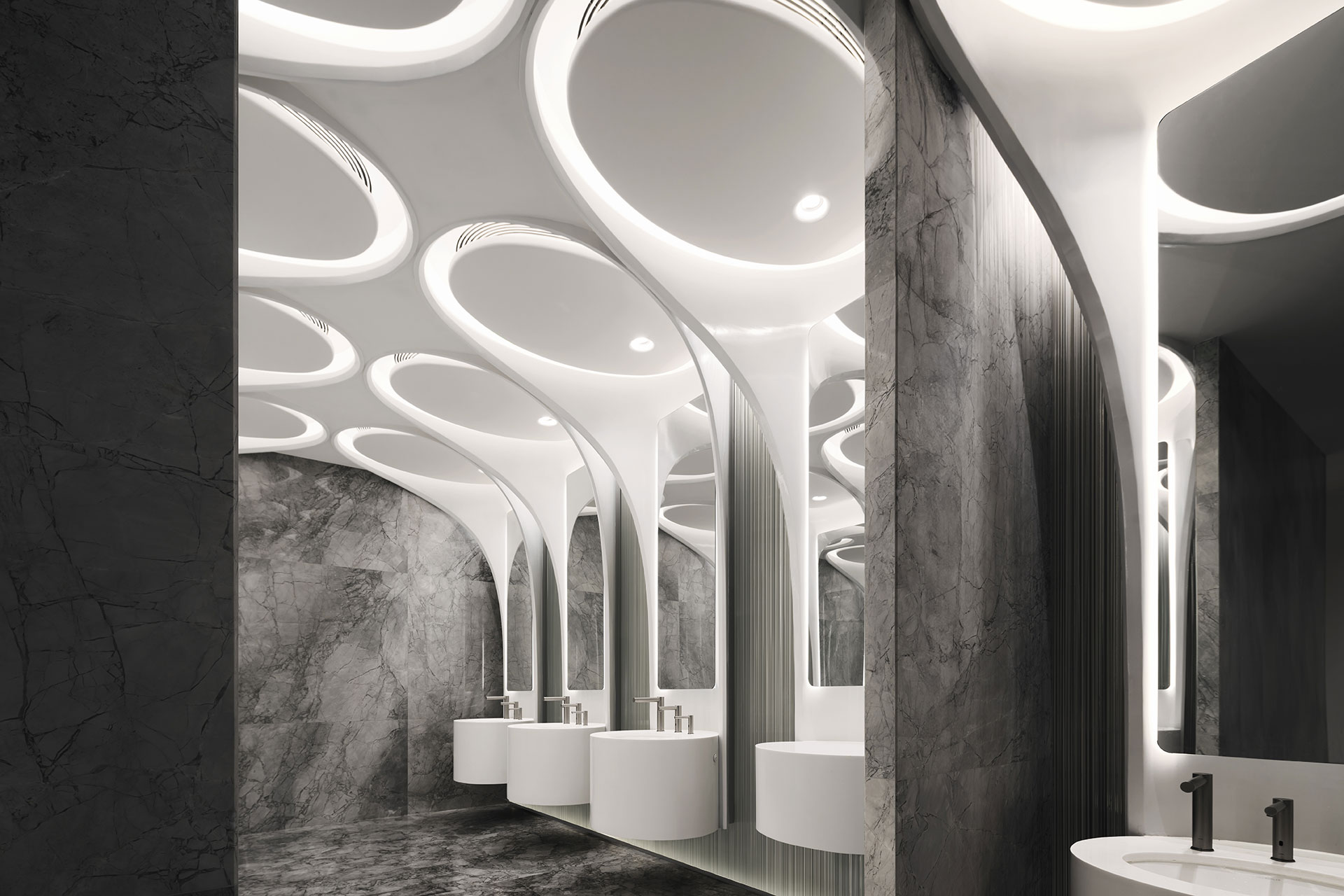
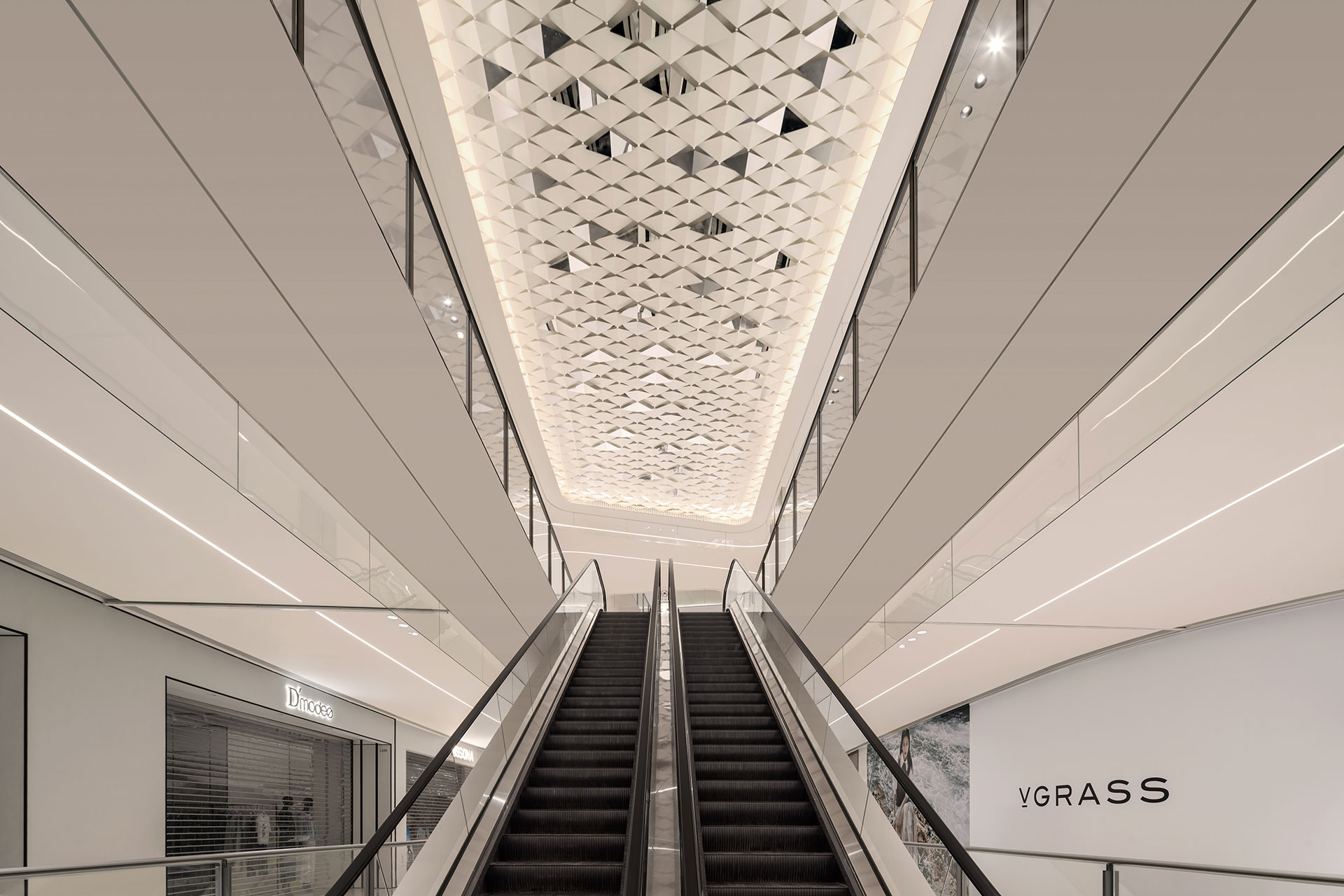
Other key spaces continue this language through carefully integrated details. In the restroom hall, sculptural column-canopy structures integrate concealed cove lighting that washes across smooth, branching surfaces, creating a serene, cloud-like diffusion. In the elevator lobby, angled marble walls catch the glow from narrow grazing channels, turning the faceted planes into subtle, crystalline surfaces of light.
Throughout the project, luminaires are embedded discreetly within architectural seams—ceiling reveals, balcony underside channels, column junctions—to preserve a clean, unobtrusive visual field. This discretion allows the environment to be defined by reflection and gradient rather than fixtures, aligning with the project’s emphasis on atmosphere over objects.
Functionally, the lighting enhances both orientation and comfort. The atrium becomes a navigational anchor with a clear vertical hierarchy, while peripheral corridors maintain lower, more intimate brightness levels to balance visual contrast. In social areas such as restaurant terraces and circulation bridges, warmer tones support human presence and nighttime activity.
Sustainability also guided the strategy. Indirect systems dominate, providing soft ambient illumination at minimal wattage, while the absence of glare reduces visual fatigue in a high-traffic commercial setting. The design transforms the interior not through excess light, but through the precise modulation of luminance and texture.
Ultimately, the interior lighting shapes the large commercial complex into an experiential landscape where form, light, and movement merge. The result is a contemporary expression of “Flowing Water · Drifting Clouds,” creating an atmosphere of continuity, calmness, and subtle dynamism that elevates everyday urban life.