


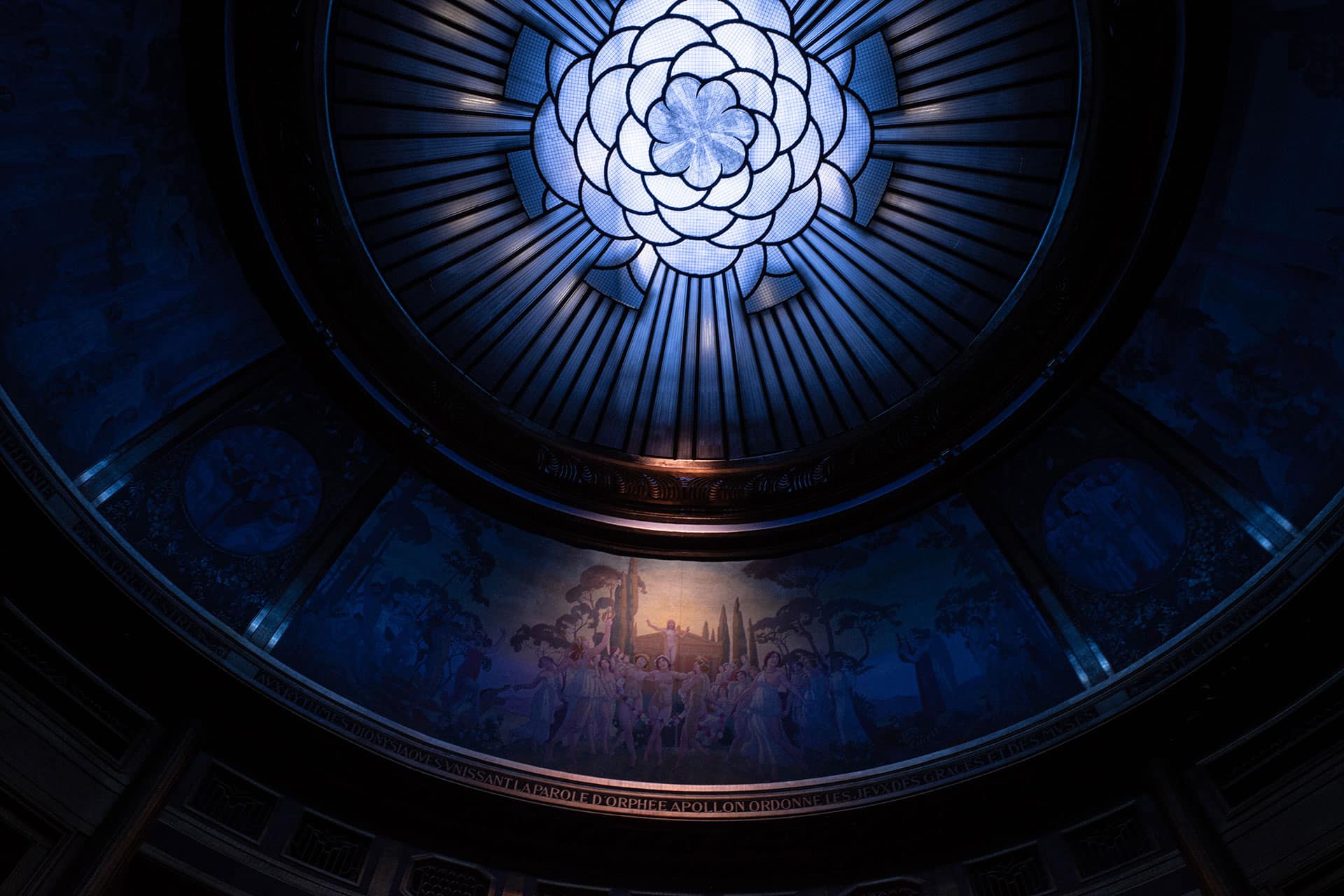
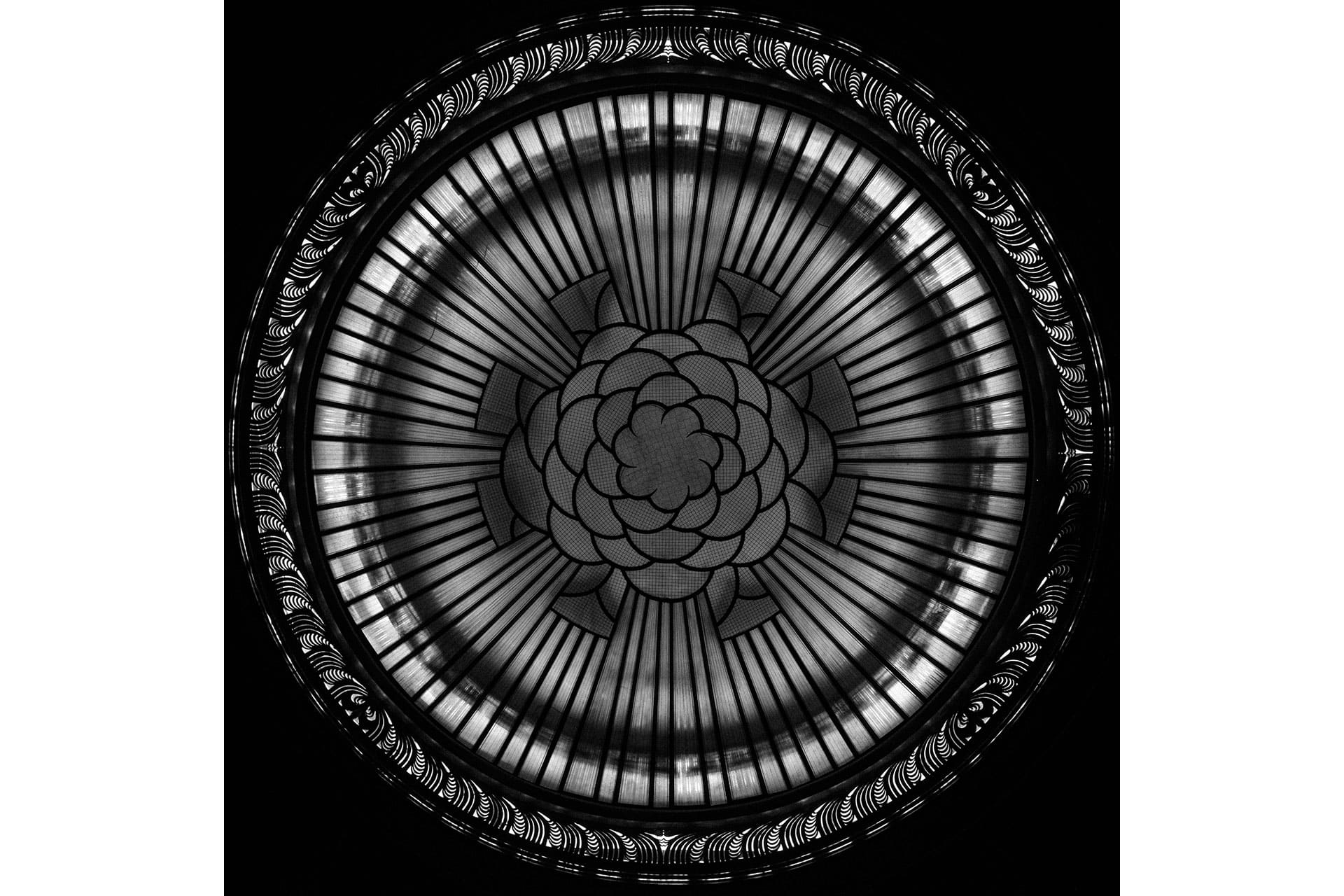
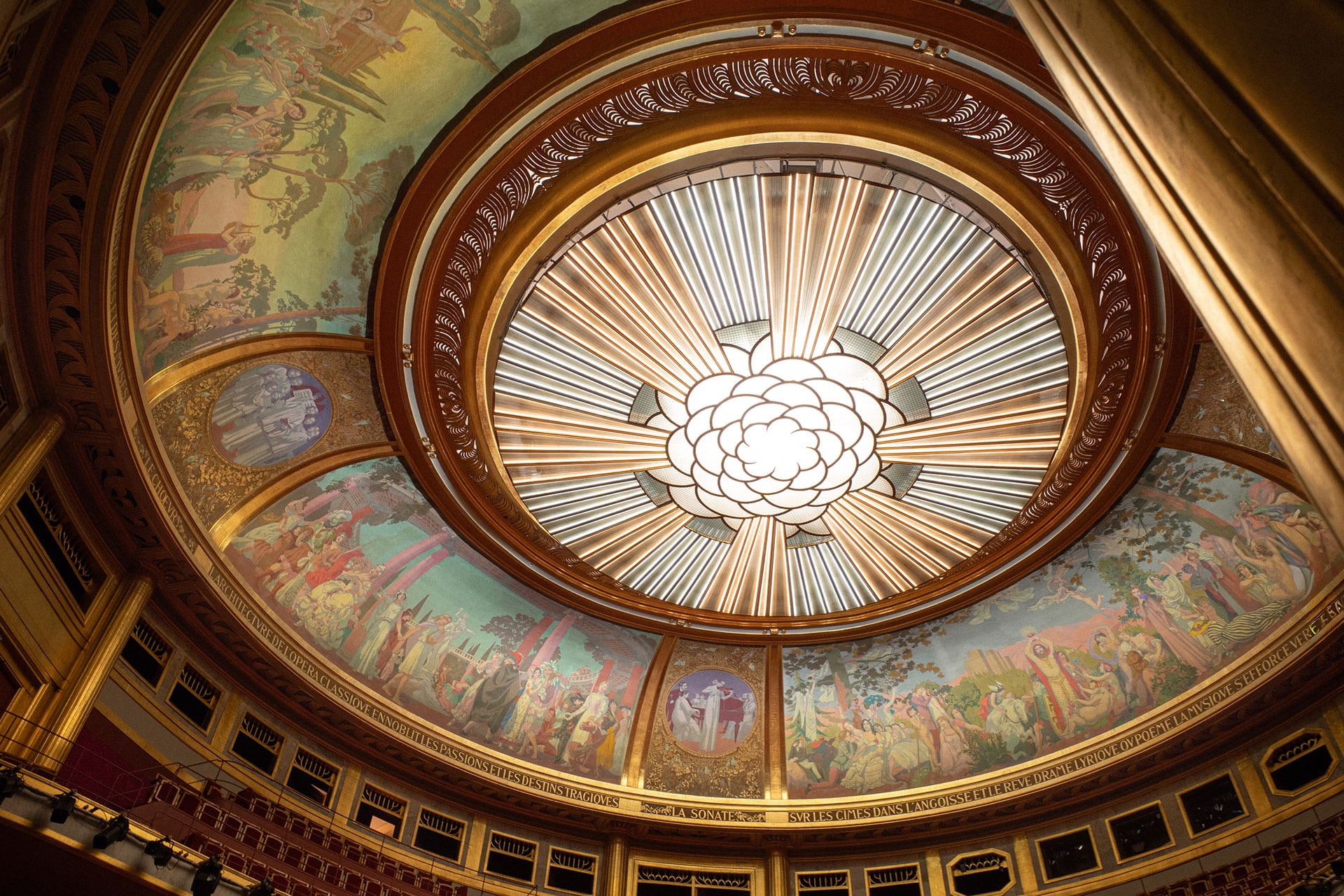
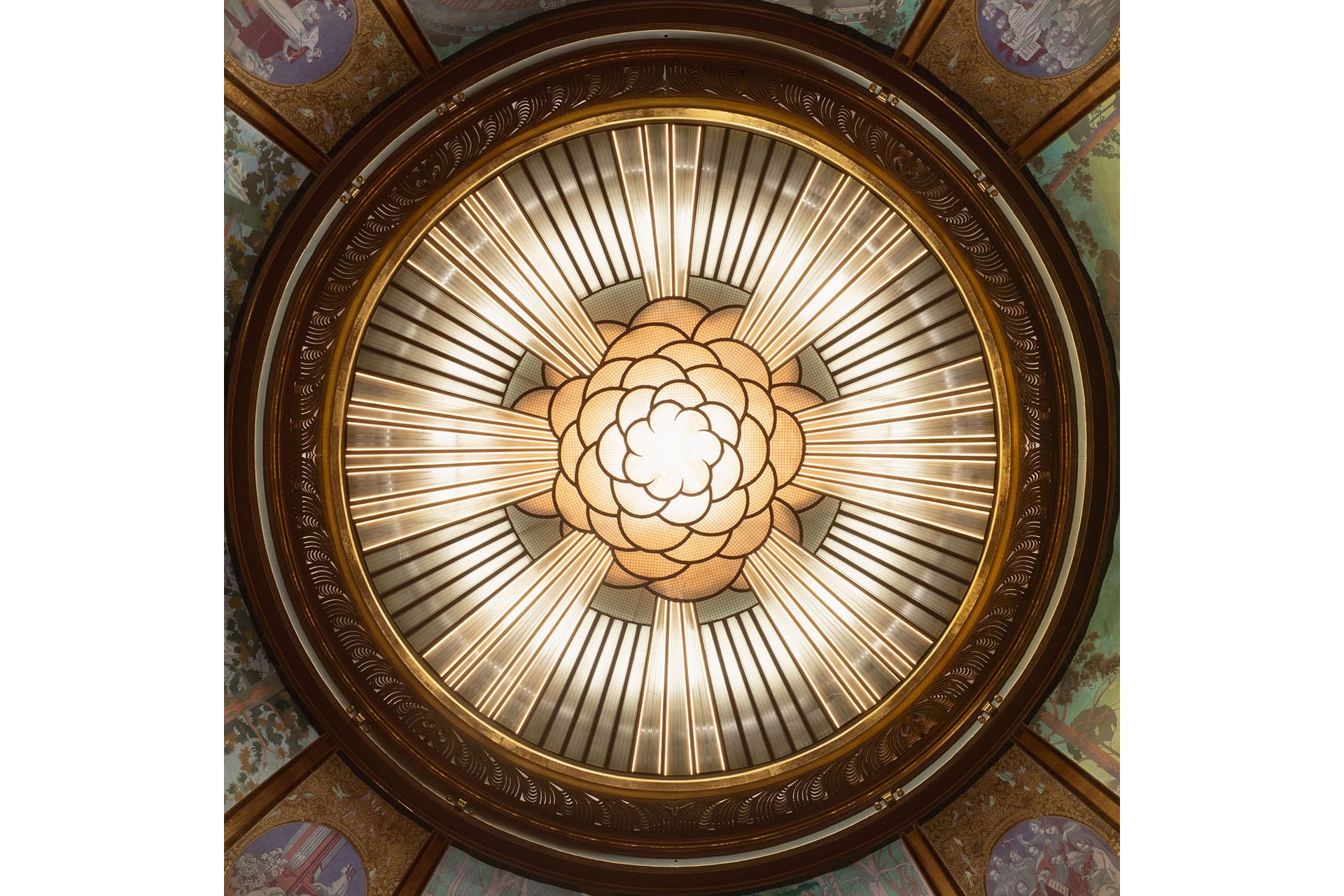
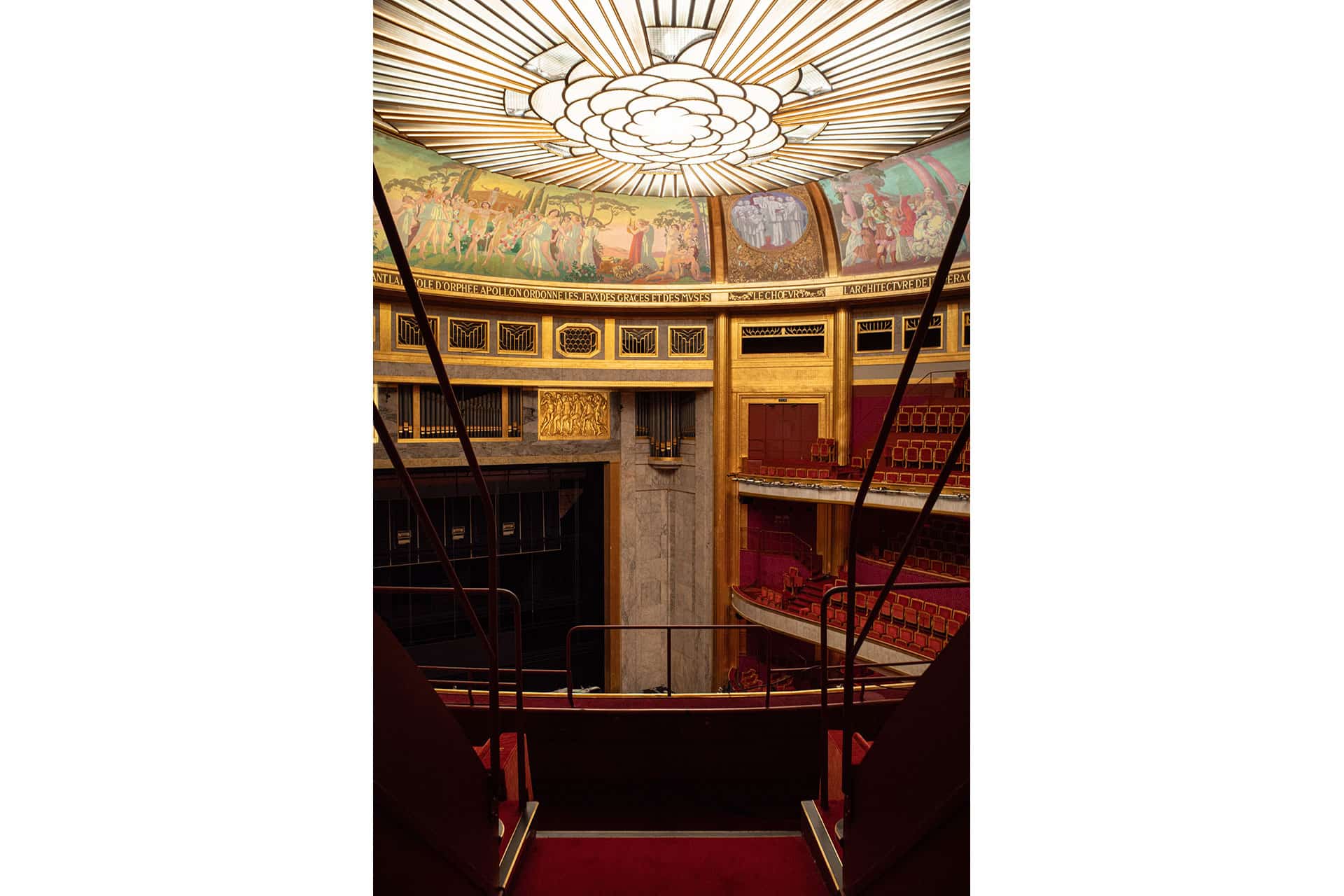
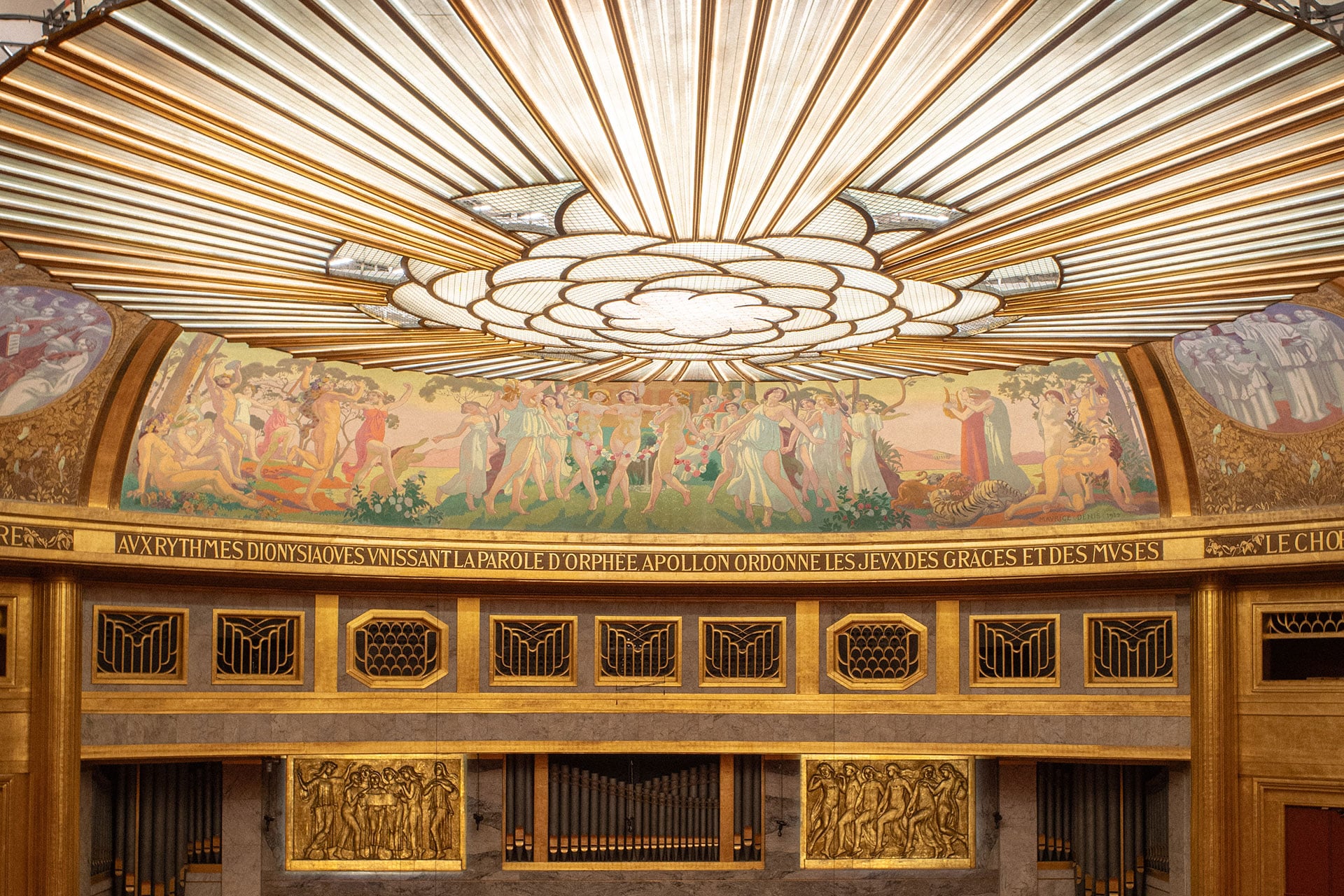

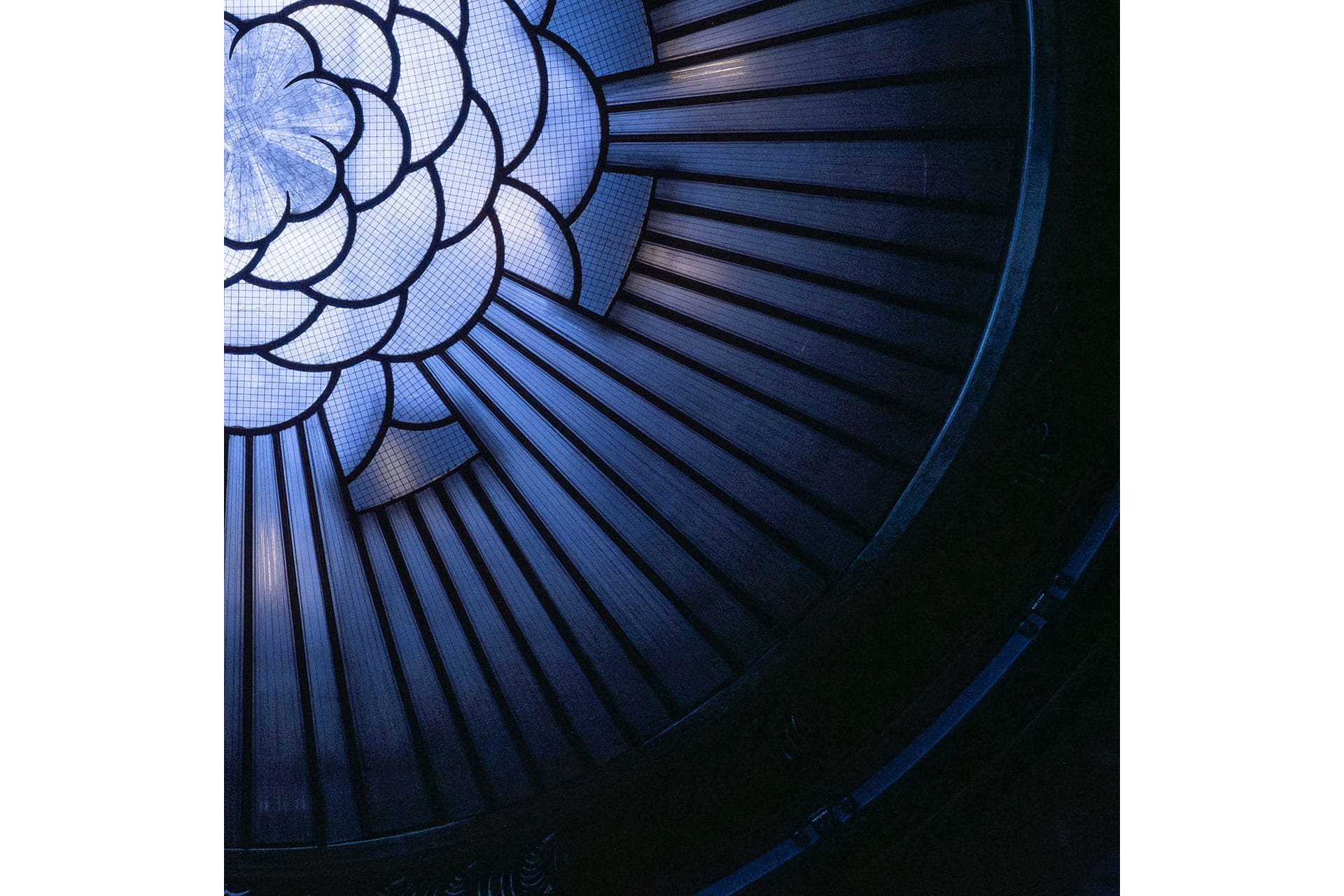
The new lighting concept provides a more “organic” rendering depending on the sit in the audience, thus causing a unique experience. From the stalls, the symmetry and purity of the graphic lines are revealed. On the 2nd balcony, the gaze will linger on the detail of the gilding and on the original structural assemblies. A way of paying tribute to the incredible « ArtDeco » craftsmanship of 1912.
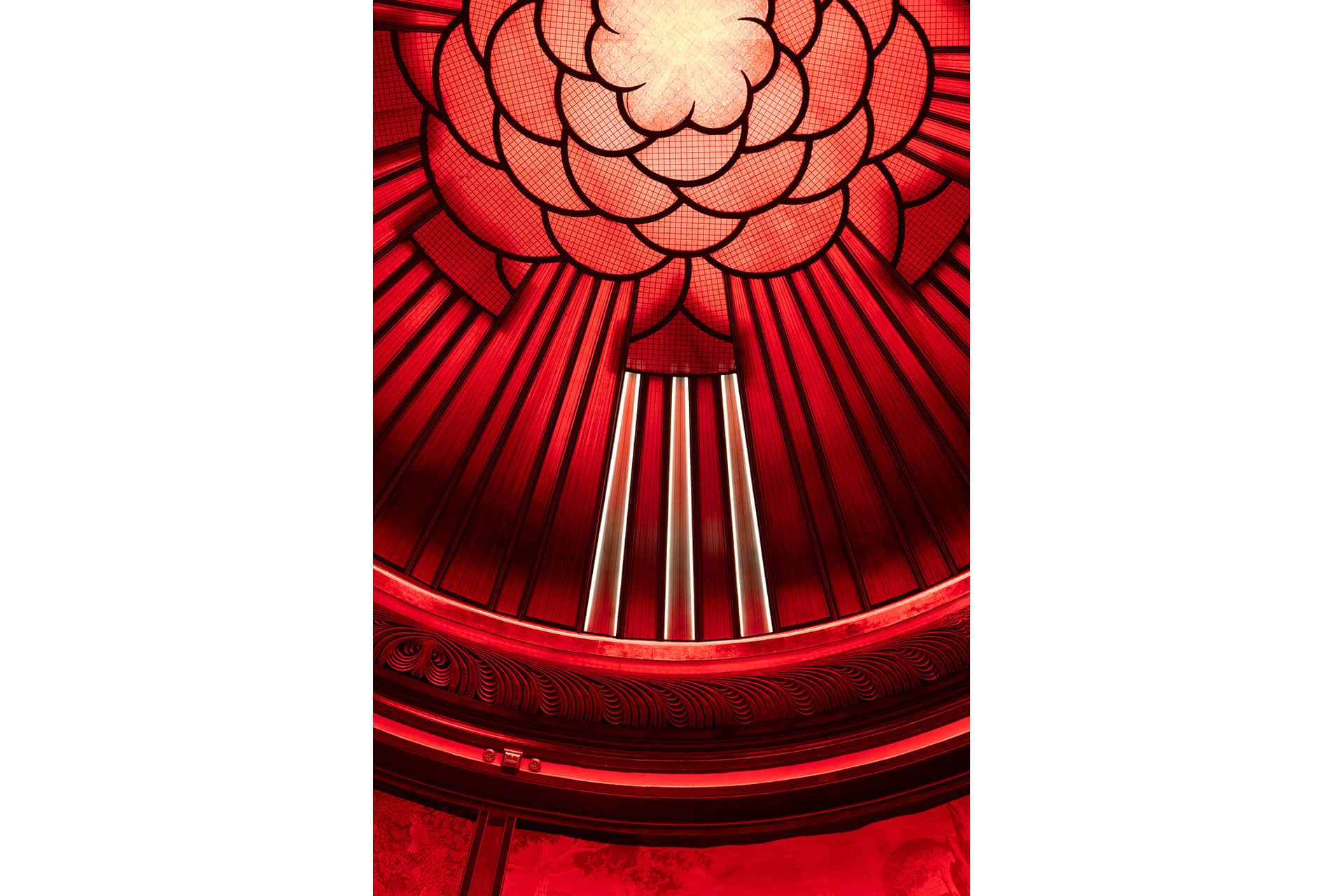
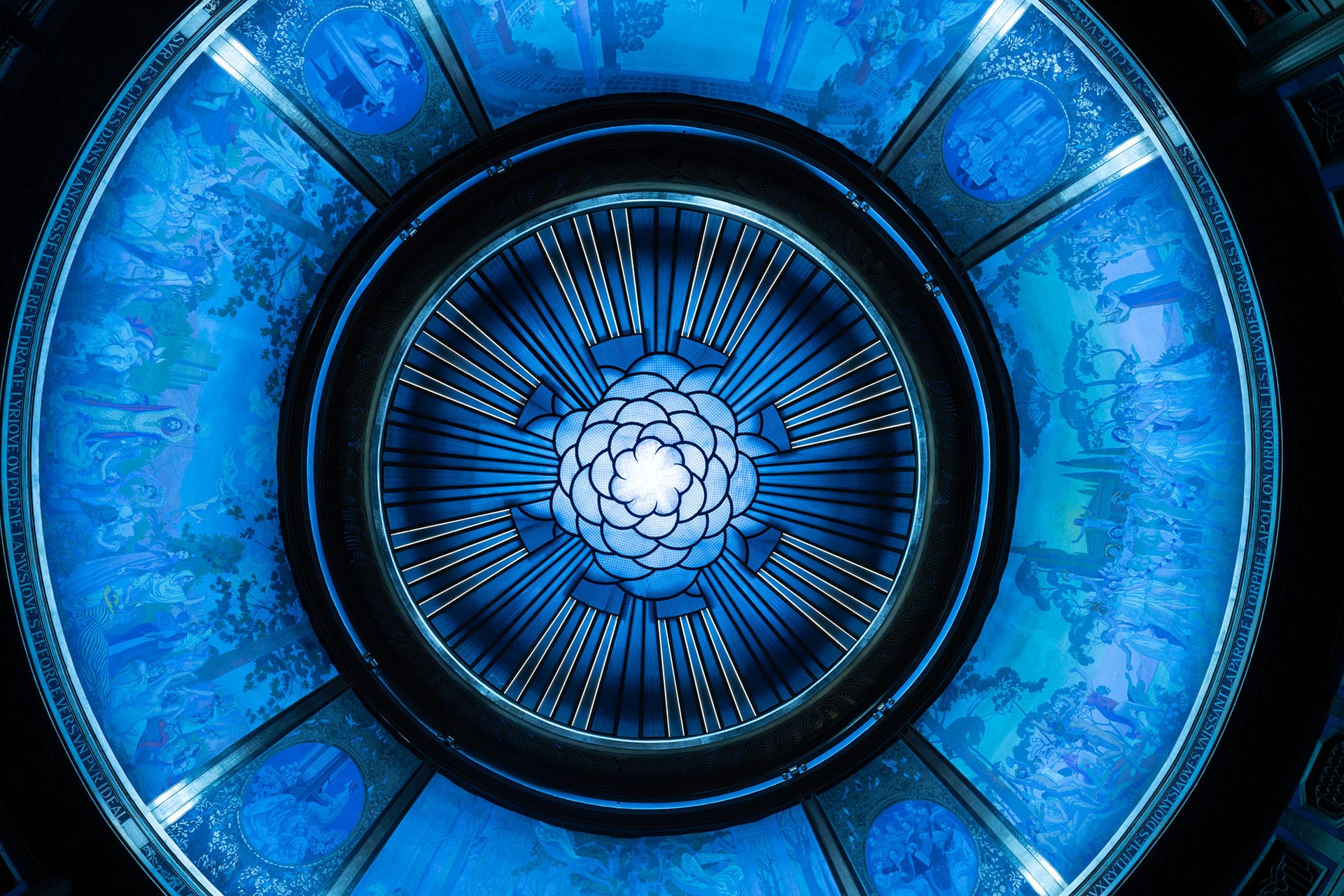
Here, the shape of the glass roof had to be used to reflect and diffuse the light. This new staging enhances the paintings and subtly highlights every detail of the dome that had never been revealed before. When the lights go down, a vibrant sun will shine on the audience. This theatrical blackout, this unique effect precisely timed, becomes the visual identity of the Theatre des Champs-Élysées. At this moment, the new dome asserts its belonging to the show, perfectly linking the audience to the stage in light and time. In this path, it substantially leaves its heritage part to become a scenographic object with an infinite graphic palette, thought as a real creative tool for stage lighting designers.
More than just a technical object, the « shield of light » is now a luminous artwork that will transform with each production and will continue to surprise audiences for many years to come. A concept that gives back to the Théâtre des Champs-Élysées all its brilliance and asserts its identity.
The project was driven by a strong commitment to sustainability. Faced with an obsolete and irreparable lighting system, the team developed a long-lasting, modular, and fully repairable installation based on a thorough analysis of the existing constraints. All dismantled equipment was responsibly recycled, while new fixtures were sourced from manufacturers with proven eco-conscious practices and designed specifically for extended life cycles.
Critical fine-tuning of LED driving currents significantly reduced heat generation, improving both energy efficiency and component longevity. The optimisation of fixture placement further enhanced photometric performance and minimised light losses. A centralised, low-energy control system combined with lightweight cabling notably reduced copper consumption. Finally, intelligent lighting scenarios were programmed to adjust automatically to operational rhythms, ensuring light is used only when needed and eliminating unnecessary power consumption.
This holistic approach harmonises artistic ambition with environmental responsibility, ensuring that the theatre’s renewed brilliance is matched by a durable, future-minded technical foundation.