
Intended to be a cultural outpost for the United States of America, the USA Pavilion at Expo 2025 looks to celebrate the best of contemporary American architecture, exhibition design, culture, and innovation. Designed by Trahan Architects, in association with BRC Imagination Arts, ES Global, and Alchemy, the USA Pavilion invites visitors to be immersed in a vibrant experience of the United States, with exhibitions that celebrate the country and its iconic vistas.
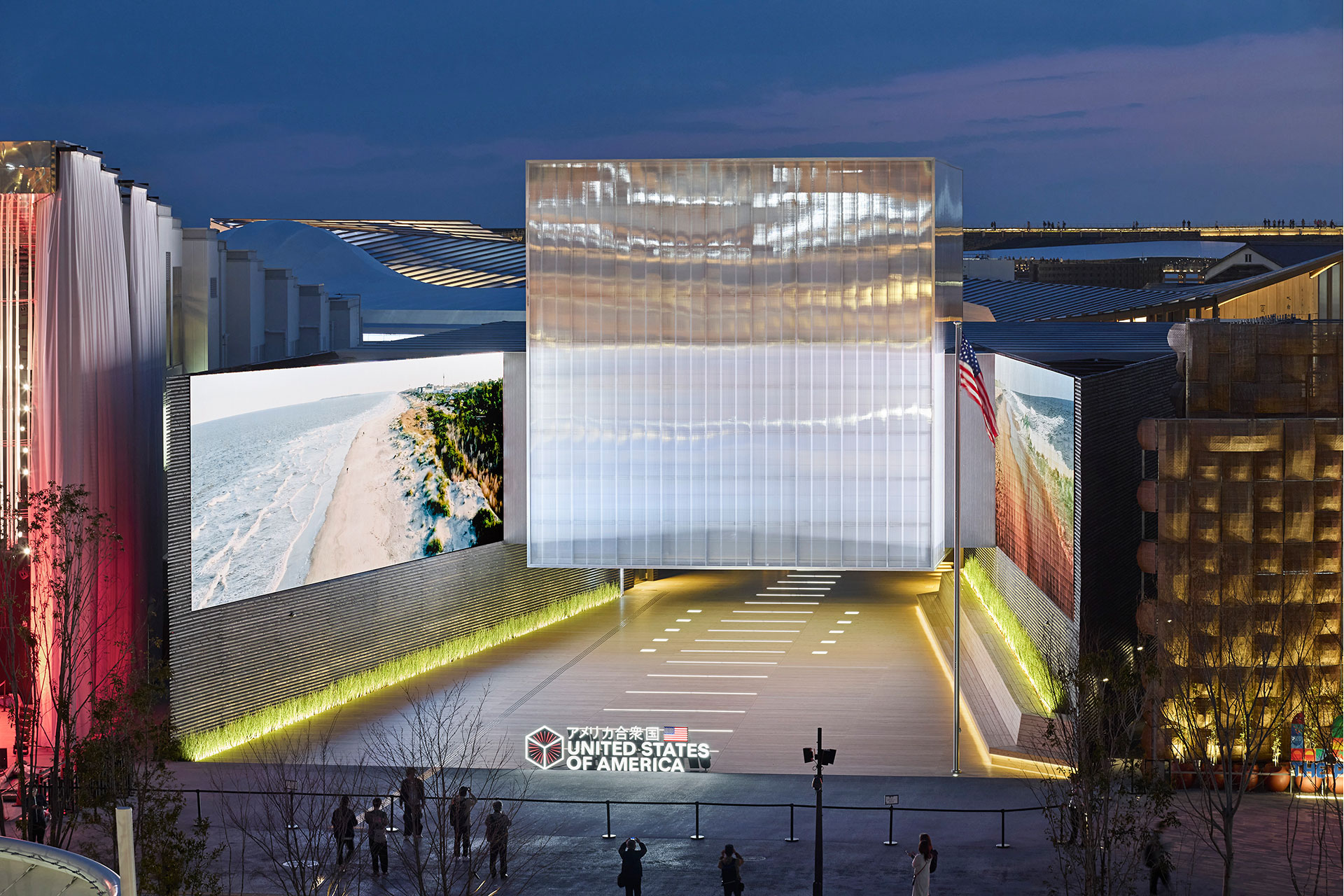
Located prominently within Expo 2025’s Grand Ring, the pavilion sits halfway between the Forest of Tranquility and the East Gate Entrance Plaza, serving as a visual gateway for all visitors. Open, grand, yet minimalistic, the pavilion is inspired on one hand by the natural and urban canyons of the USA, and on the other by ancient Japanese footbridges.
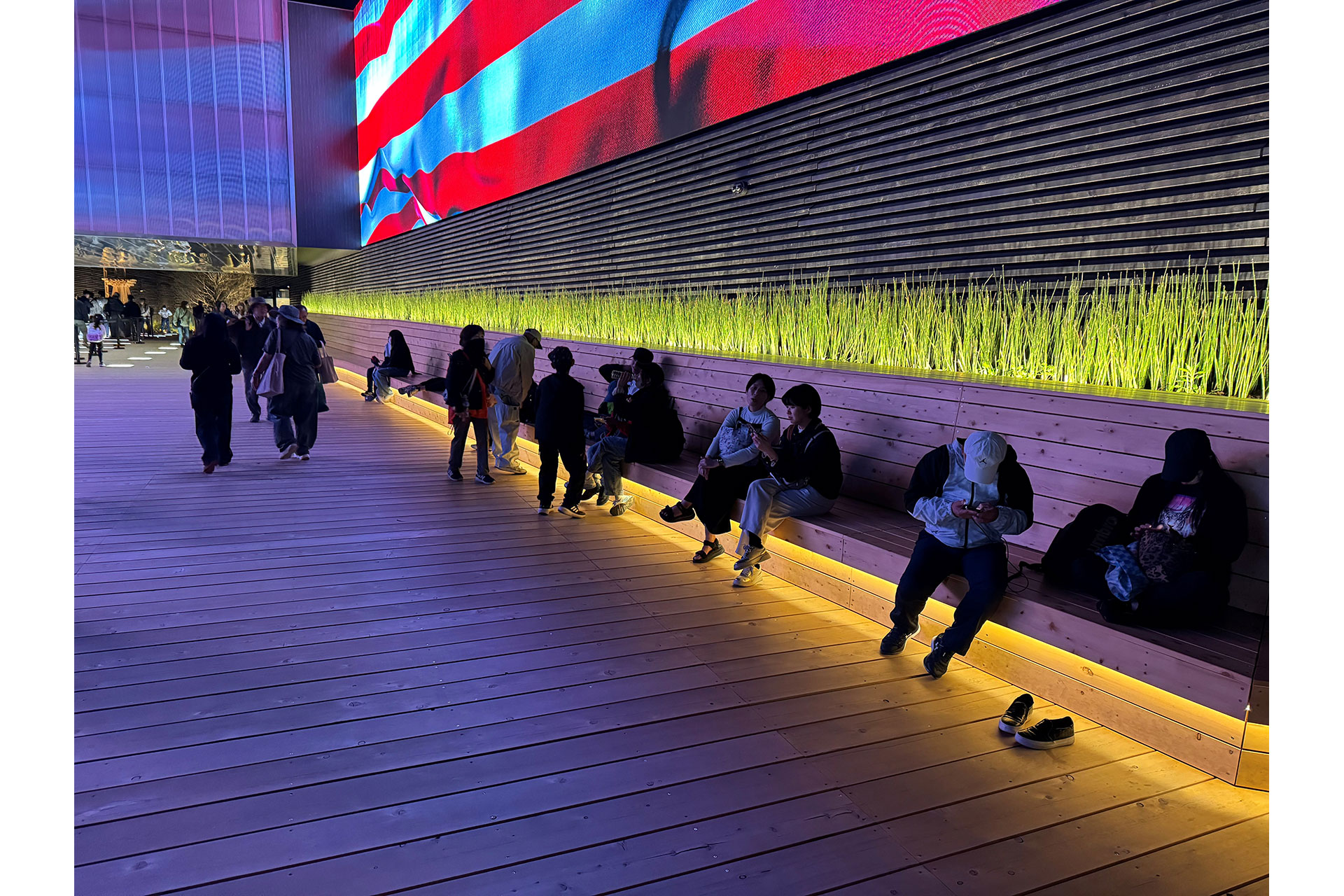
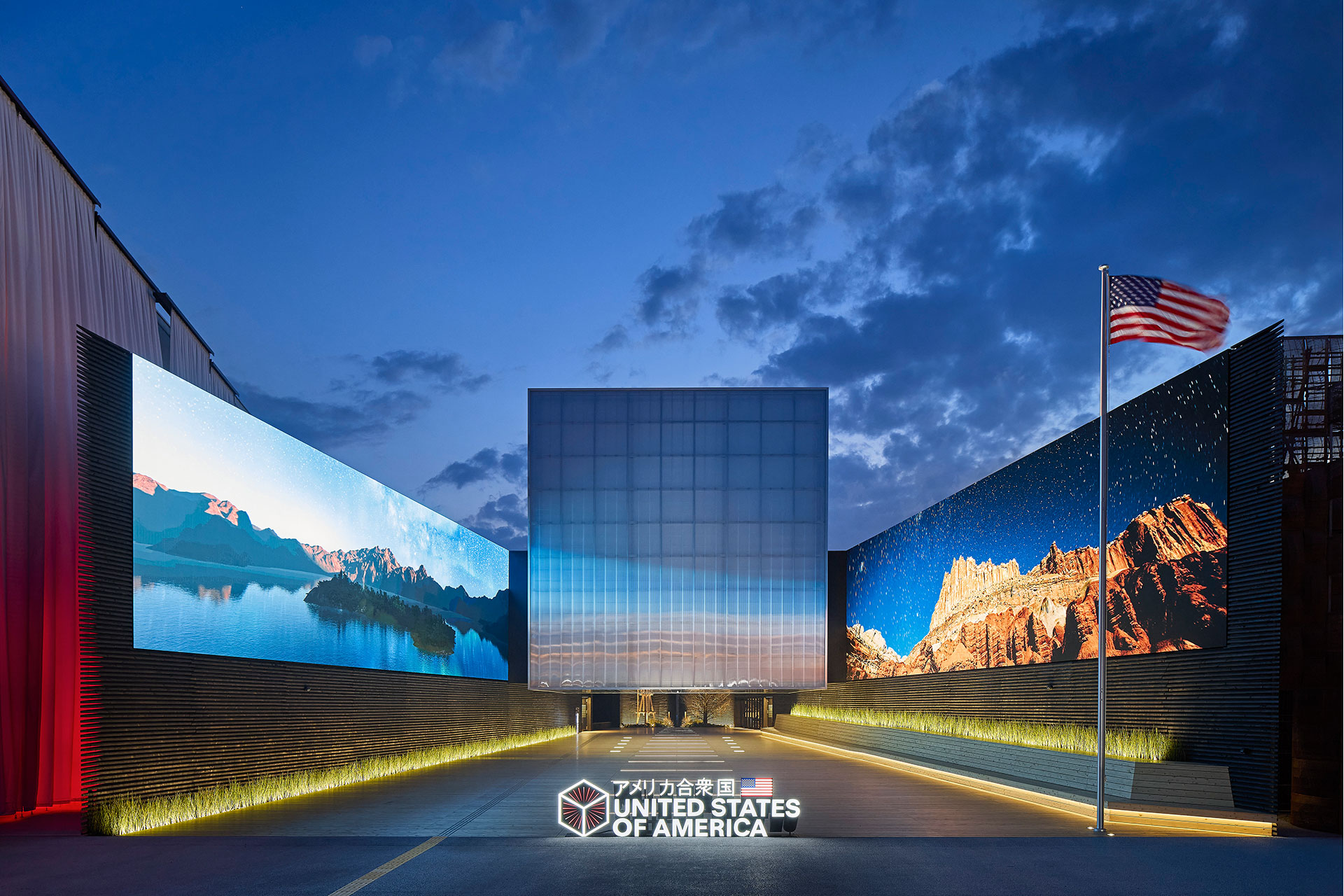
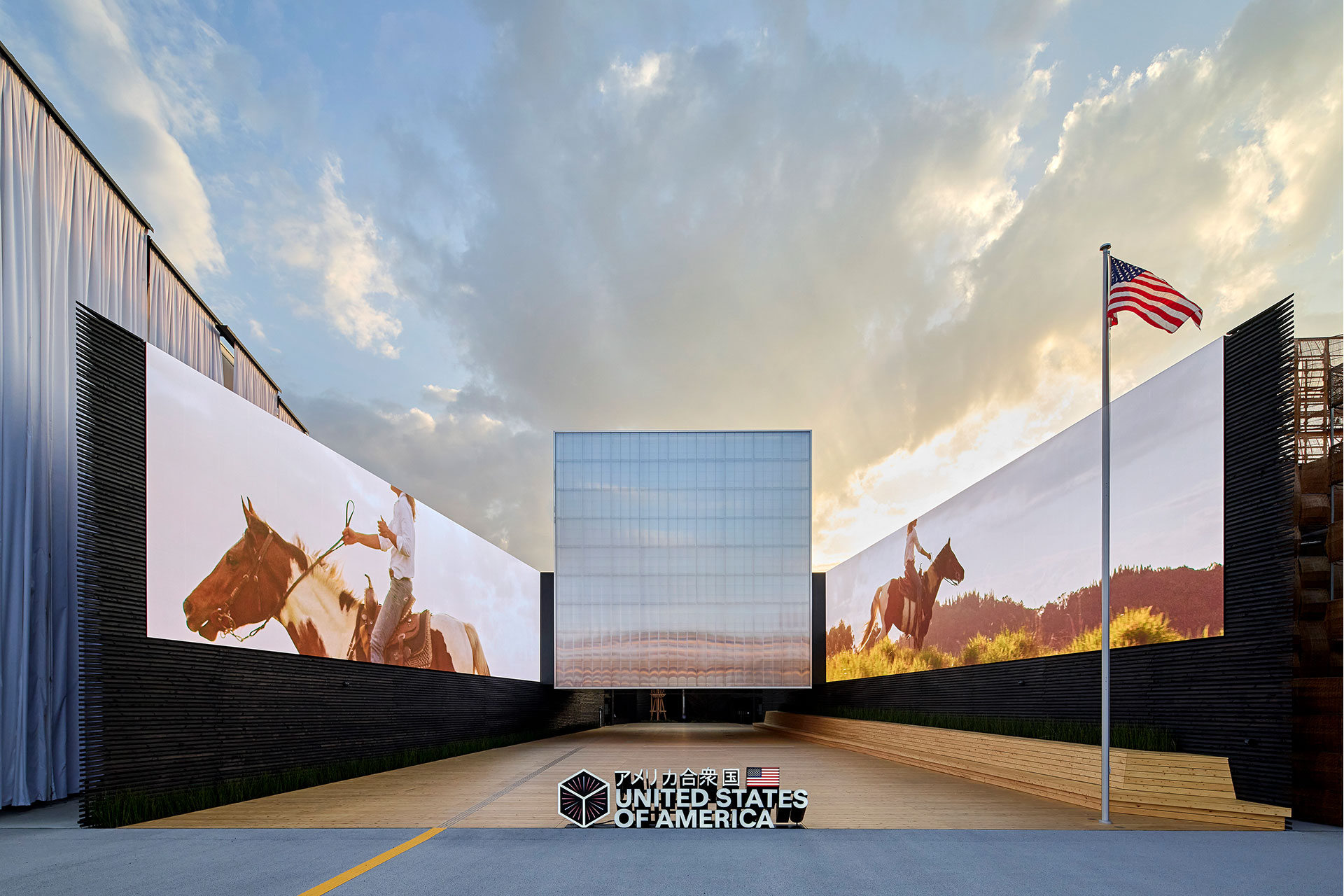
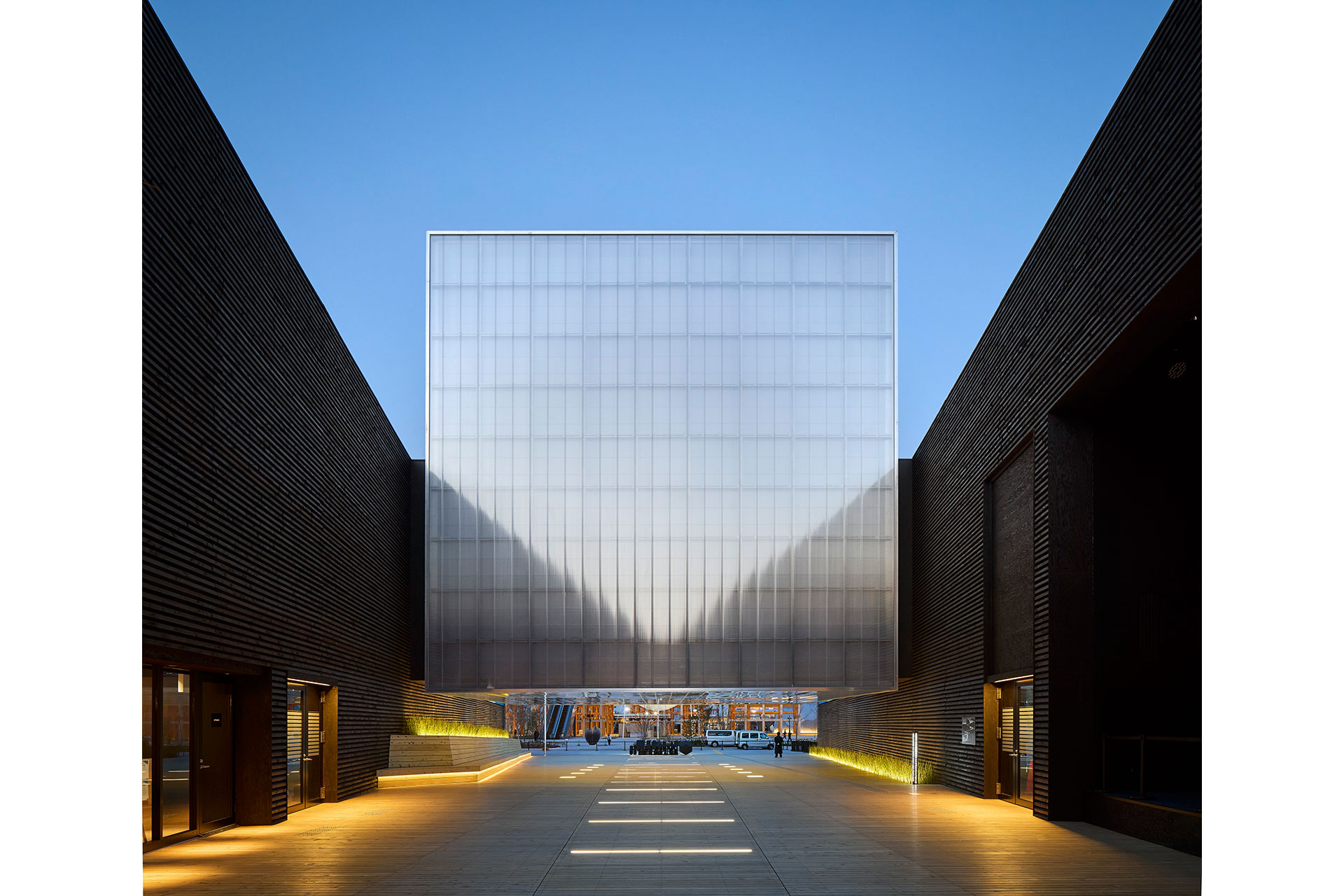
On approaching the pavilion, two triangular buildings create a central plaza and serve as expansive wings, with LED screens depicting iconic and dynamic images of American landmarks and landscapes.
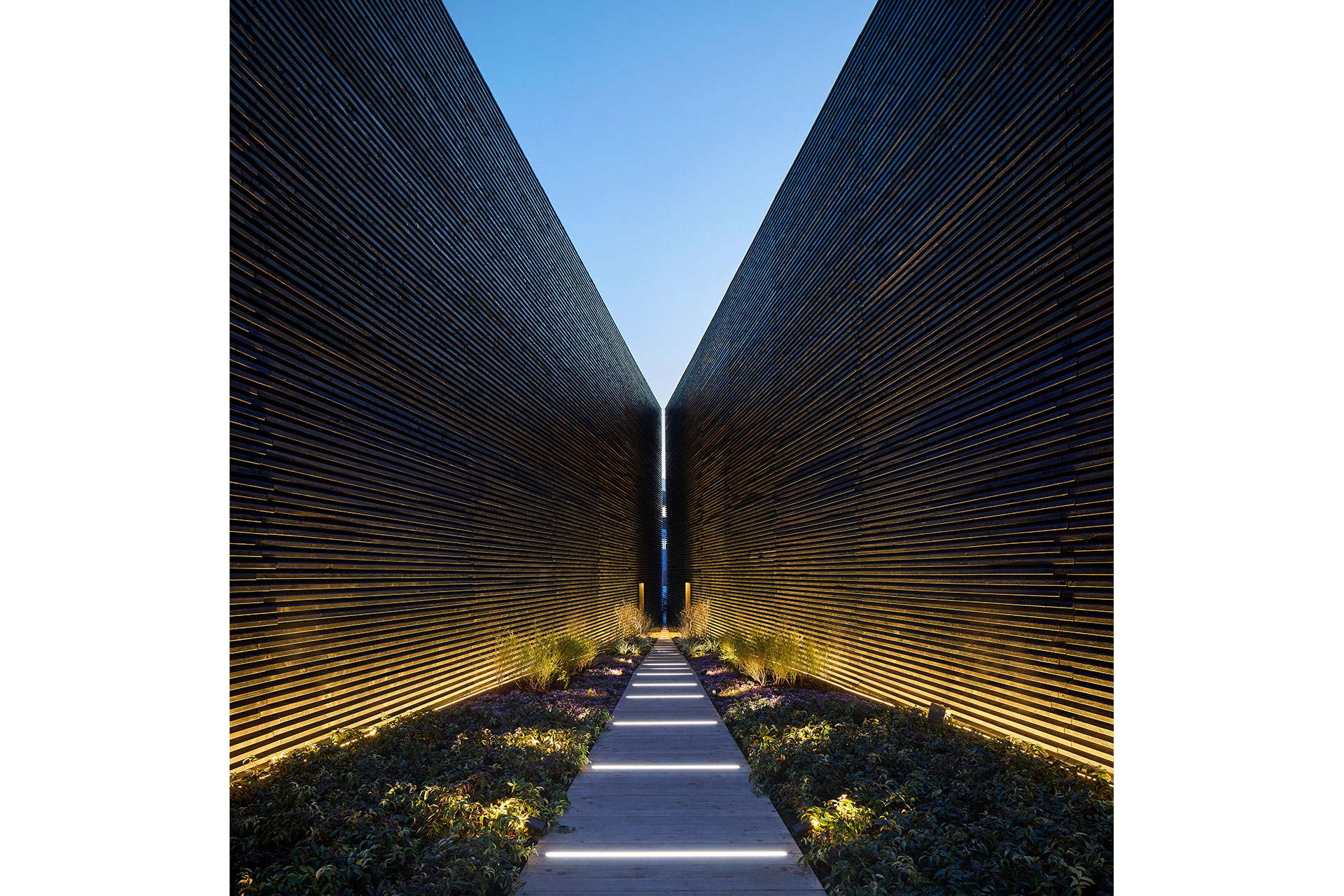
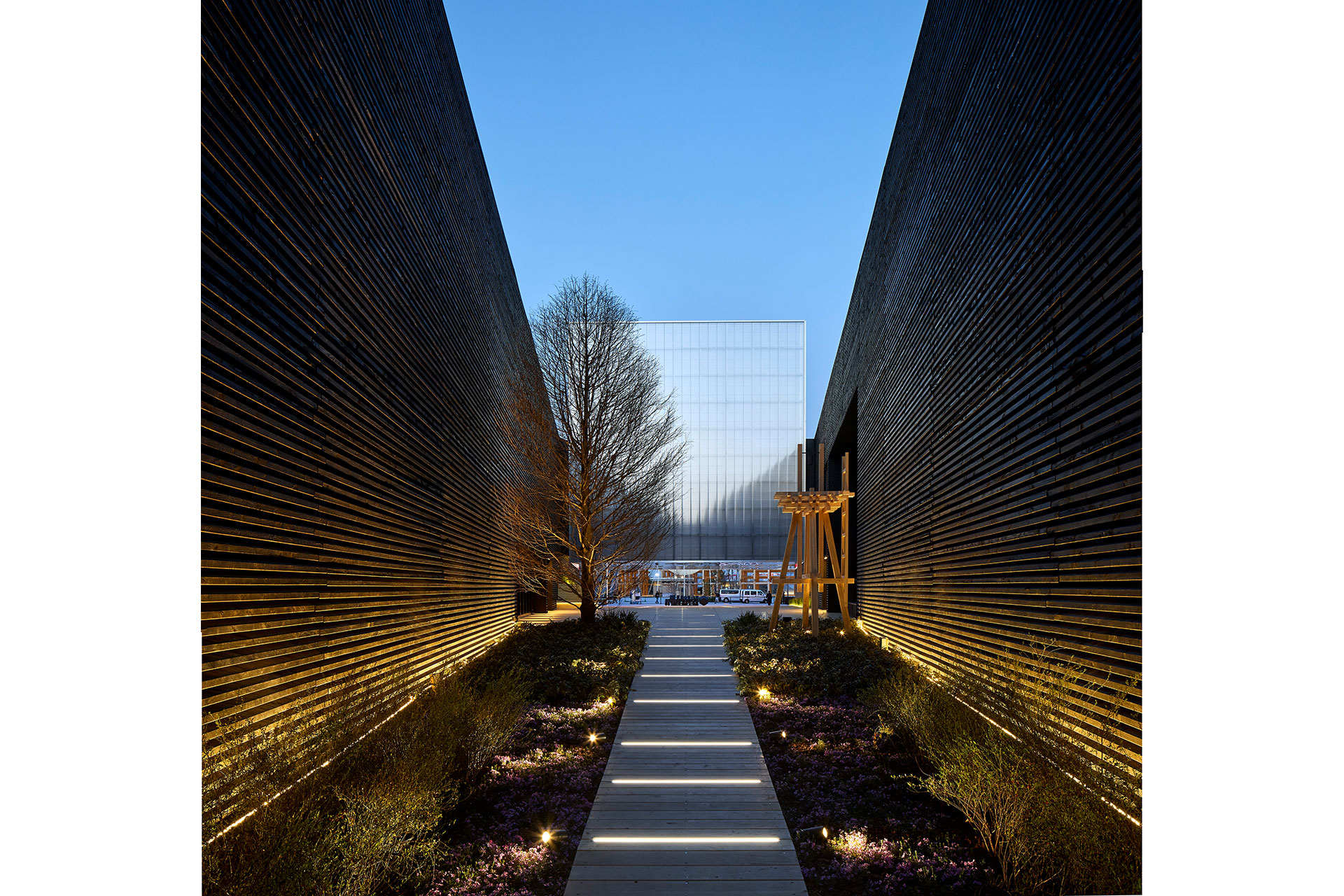
The plaza arches gently, creating a sense of balance, while cultivating a unique journey through the space and narrows to a point, creating a sense of calmness within the architecture. At the rear of the pavilion, visitors find a moment of reprieve in the serenity garden, where the two wings meet, allowing a sliver of natural light into a small garden.
A ‘floating’ translucent cube – brightly illuminated and suspended above visitors, inspired by Japanese torii gates, transitions the pavilion’s active public plaza to its contemplative private courtyard.
A brightness hierarchy aligns with the architecture and flow of visitors, with the lighting design supporting an energetic introduction to the external space, while transitioning to calmer surroundings within the garden of serenity.
The integration of various lighting layers accentuates the architectural and landscape components, from the demarcation of the Alaskan Yellow Cedar central walkway and uplighting to the underside of the recyclable translucent polycarbonate central cube, to floating the linear geometry of the seating bench and planters. The slatted Douglas Fir cladding within the garden of serenity is brushed with close offset warm white uplighting, highlighting the verticality of the canyon-like space.
In a similar sense, the use of low-level, linear lighting adds to the desired feeling of calmness within the serenity garden. The narrowing pathway has been expressed through a continuation of the linear, homogenous lines of light, reinforcing the architectural vista and sense of perspective to the visitor, within the canyon. Atmospheric landscape lighting, to the low-level shrubs, a single tree, and sculptural piece provide an additional, residential feel.
Understanding the context and positioning of the pavilion within the Expo is important. This included looking at the visitor viewing angles from the prominence of the Expo’s Grand Ring, which required greater attention regarding the placement of the lighting equipment and light distribution, reducing potential glare and light spill.
The pavilion structures are designed to be dismantled with minimal waste, organisers have launched a reuse matching project, to pair new end-users with building materials from the event.